

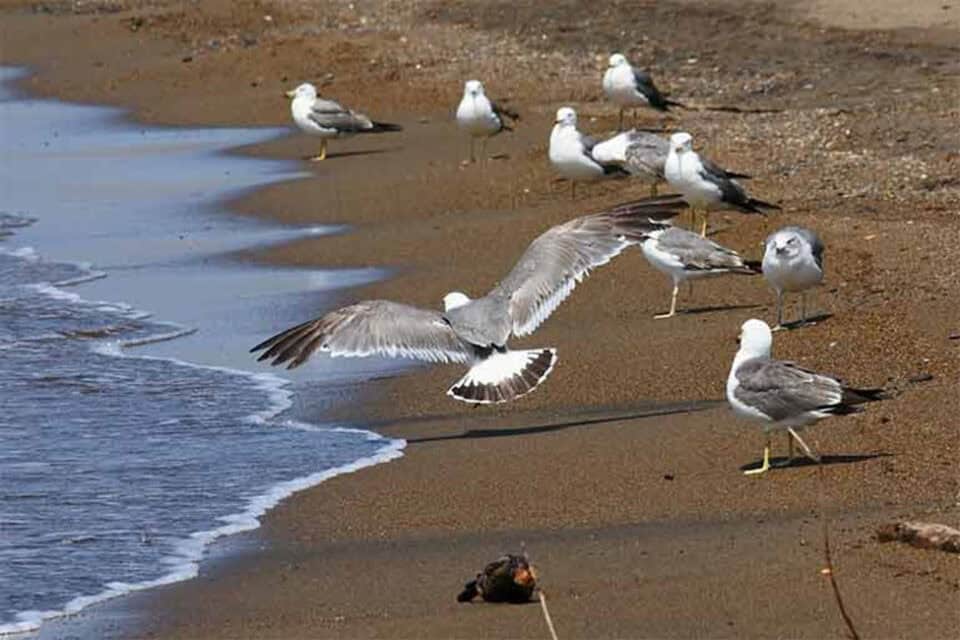
Seabirds’ ‘circular economy’: ocean-island-people—a natural bridge connecting everything.
A new review in Nature Reviews Biodiversity states that seabirds contribute nutrients to islands and nearby waters through their guano and urine, supporting the growth of algae, corals, marine fish, and coastal ecosystems.
30 October 2025 — A global study by Northern Illinois University (NIU) shows that nutrients from seabird guano enhance soil and vegetation near their islands. Nutrients return to the ocean through rain and tides, promoting coral growth and increasing fish populations, which strengthens coastal ecosystems’ resilience to climate stress. This article was published on 27 October 2025.
Island-based conservation in Bangladesh’s coastal areas can support the marine-terrestrial ecosystem, helping to preserve local fisheries and coral biodiversity. is easily understood, and it also touches the regional economy/culture (navigation, fertilizer/guarantor, food, cultural identity).
Seabirds are among the most threatened bird groups in coastal ecosystems, facing daily declines due to predators (like rats and cats), habitat destruction, and climate change. If this happens, the ecosystem will weaken, putting about one-third of the species at risk.
What we need to do for the solution –
- Preventing the entry of invasive rats and cats onto the island,
- Ensuring the bio-security of the island/peninsula,
- Protecting nesting sites, Seabirds’ ‘circular economy’: ocean-island-people—a natural bridge connecting everything
- A new review in Nature Reviews Biodiversity states that seabirds contribute nutrients to islands and nearby waters through their guano and urine, supporting the growth of algae, corals, marine fish, and coastal ecosystems.
- Island-based conservation in Bangladesh’s coastal areas can support the marine-terrestrial ecosystem, helping to preserve local fisheries and coral biodiversity. is easily understood, and it also touches the regional economy/culture (navigation, fertilizer/guarantor, food, cultural identity).
- Seabirds are among the most threatened bird groups in coastal ecosystems, facing daily declines due to predators (like rats and cats), habitat destruction, and climate change. If this happens, the ecosystem will weaken, putting about one-third of the species at risk.
What we need to do for the solution –
- Eradicating invasive predators on the island
- Social attraction and chick transfer
- Tightening waste management
If these steps are taken, the seabirds will return. When seabirds return, coral reefs and fish recover quickly. A 2025 study showed that seabirds boost nutrient flow in the ecosystem, enhancing coral reef productivity and herbivorous fish biomass. This creates a successful ‘circular economy,’ with many positive examples worldwide.