

Green ammonia and the transformation of the global shipping industry
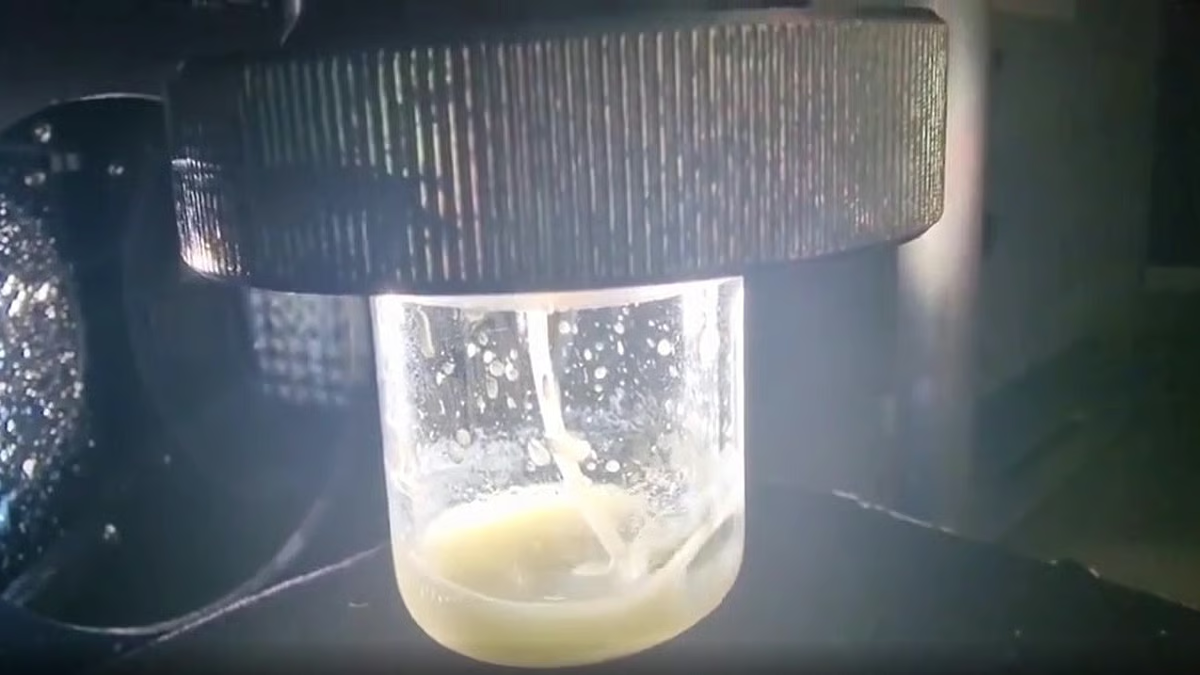
 New fuel for carbon-free shipping: Britain and Denmark succeed in producing green ammonia.
The shipping or maritime transport industry is a major source of global greenhouse gas emissions. ‘Green ammonia’ ($NH_3$) has emerged as a breakthrough technology to decarbonize this sector by 2025.
The world’s first dynamic green ammonia plant recently opened in Ramme, Denmark, producing fuel from wind, water, and renewable energy.
A green ammonia prototype plant has begun operations in the UK as part of a £1.1 billion government project, converting surplus wind energy into fuel for storage.
The method for creating green ammonia is cutting-edge and highly innovative. It is basically a combination of hydrogen and nitrogen. First, hydrogen is separated from water through electrolysis and nitrogen is collected from the air.
These two components are converted into ammonia using high pressure and a catalyst in the Haber-Bosch process. This new dynamic process automatically adjusts production based on changes in sunlight or wind speed, reducing costs compared to traditional methods. Its chemical equation is:
Ammonia is a great fuel for shipping because it has a higher energy density than liquid hydrogen and can be easily transported as a liquid at normal temperatures.
The Denmark plant will generate 5,000 tons of green ammonia annually, cutting carbon emissions by 9,600 tons. Shipping companies such as Maersk and other major shipbuilders are now investing heavily in developing ammonia-powered engines.
This will revolutionize not only as a fuel, but also in the production of carbon-free fertilizers in agriculture. The toxicity of ammonia is a concern, prompting the development of special leak-proof storage and safety systems for ships.
Experts estimate that green ammonia could help achieve 15% of the goal to reduce global carbon emissions by 80% by 2035.