
On August 26, 2026, a big ice collapse and sudden flood happened in the Himalayas near Tibet, at the border of Nepal and China. This created a serious crisis for people.
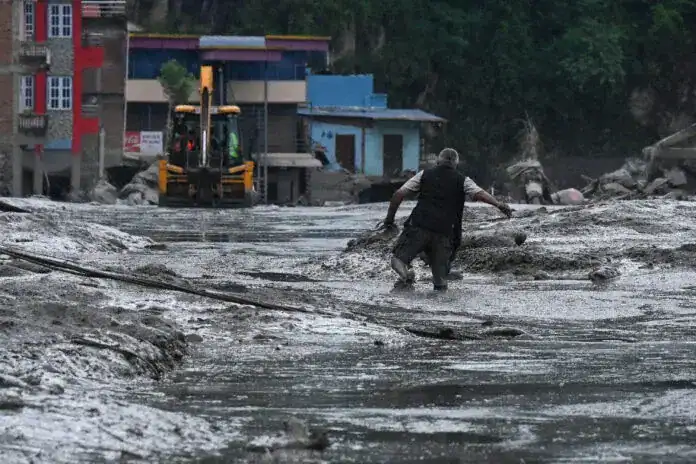
In this sudden disaster near the Langtang Lirung and Jomolhari mountains, the strong water flow from the Lhende Khola and Bhotekoshi rivers severely damaged many towns in northern and central Nepal.
According to the latest update, the death toll in this natural disaster has exceeded 600 and about three thousand people are still missing.
The seriousness and geological reasons for the disaster: the US Geological Survey (USGS) and global researchers say this was not a typical seasonal flood:
Glacial landslide: A huge glacier or ice–rock section suddenly collapsed from an altitude of about 5,200 metres and crashed thousands of feet into the valley below. Its intense speed and friction caused a debris flow that instantly created a river water level of about 9 metres in just half an hour, flooding the low-lying areas.
China–Nepal border trade center is gone: Gyirong Port, the main spot for trade and tourism on the China border in Nepal’s Rasuwagadhi district, and Timure Bazar were fully destroyed. Hundreds of homes, hotels, roads, and some hydroelectric projects in the Siyabrubesi, Betravati, and Trisuli Bazaar areas were buried or ruined.
Rescue work and the crisis: the disaster was so severe that many automated water‑level monitors and warning systems in the mountains were washed away by strong water flows. This stopped any early warnings.
More than 2,000 people are missing in Nepal, says the government and police. Many of them are tourists, pilgrims, and workers from hydroelectric projects. The Indian Ministry of External Affairs has said that more than 300 Indian citizens are among the missing, for whom rescue operations are underway.
Economic harm and rebuilding issues: Nepal’s Finance Minister Swarnim Wagle said it could cost the country about 10% of its economy, or $4 to $5 billion, to recover from this disaster. The situation has become difficult as the number of bodies and lack of space in hospitals have increased. The United Nations and the international community have sent emergency funds and rescue teams to help the victims.
The melting and breaking of glaciers in the Himalayas due to warming and climate change is a bad warning for the mountain ecosystems of South Asia.
Green Page believes that not only immediate relief distribution, but also the development of advanced and modern cross-border early-warning systems and transboundary climate risk management across the Himalayan basin are the biggest and most urgent demands of the time.