

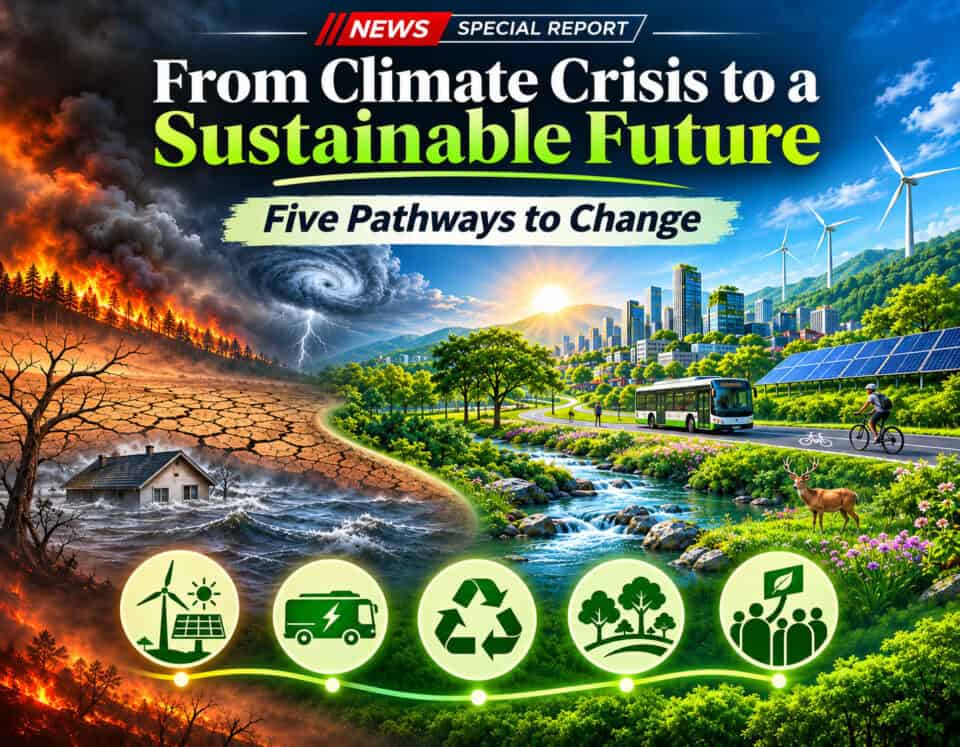
The climate crisis is not just a far-off problem; it is a real global issue that impacts people’s lives, jobs, economies, and the planet’s future. The effects of climate change, including serious floods, storms, long droughts, higher sea levels, and very hot temperatures, are clear now. However, these impacts are not felt equally by all. Despite contributing relatively less to global warming, developing countries produce fewer greenhouse gases but suffer more because they have less money, technology, and preparation. Global actions suggested by the Prime Minister of Bangladesh at the 31st UN Climate Change Conference (COP31) in Antalya, Turkey, deserve serious global focus. These ideas provide an important way to create climate justice, speed up fair growth, and make sure no country or people are neglected as we work for a sustainable future.
- Directing at Least 50 Percent of Climate Finance Toward Adaptation
Climate finance must address the realities of vulnerable communities. For many developing countries, adaptation is not simply a policy preference; it is a matter of survival. Investments are urgently needed in climate-resilient infrastructure, disaster preparedness, flood protection, sustainable agriculture, water management, and resilient health-care systems.
Allocating at least half of international climate finance to adaptation, based on each country’s needs, would be a big step to fixing the current unfairness. Emissions remain essential; communities already experiencing the consequences of climate change cannot afford to wait for mitigation efforts to deliver results.
Adaptation funding can help protect jobs, improve food security, and save lives in Bangladesh, where many people face floods, cyclones, river erosion, and saltwater intrusion. Climate finance must priorities the needs of vulnerable populations rather than remain disproportionately focused on emissions-reduction projects.
- Introducing Debt Relief Through Climate Swaps
Climate change is creating an increasingly difficult financial dilemma for developing nations. Many countries must borrow to recover from climate-related disasters while also investing in adaptation and sustainable development. Rising debt payments can therefore undermine their ability to protect their populations and build resilience.
Debt-relief measures, including debt-for-climate swaps and Climate-Resilient Debt Clauses, offer potential ways to ease this burden. Under climate-swap arrangements, a portion of a country’s debt obligations can be redirected toward nationally determined climate and environmental programmes. Climate-resilient debt clauses can provide additional flexibility when countries face severe climate-related shocks.
These measures could create fiscal space for renewable energy, forest conservation, coastal protection, biodiversity, and resilient infrastructure. They need to be made clear and fair, with the complete involvement of the borrowing countries, to prevent new financial or management problems. Rahman urged the inclusion of women and young people in climate action, the creation of decent green jobs, and cuts in global emissions to keep the 1.5°C goal within reach.
- Ensuring Fair Access to Green Technology
Technology is one of the most powerful tools for addressing climate change, but access to advanced green technologies remains unequal. Developing countries frequently face high costs, intellectual property barriers, limited technical expertise, and inadequate infrastructure.
Fair access to climate-friendly technologies is essential for an inclusive global transition. Solar and wind energy, energy storage, electric cars, smart farming, water saving, and warning systems need to be cheaper and easier to get for the countries that need them the most.
International cooperation should extend beyond supplying equipment. It should include knowledge-sharing, technical training, research partnerships, institutional capacity-building, and support for local innovation.
A sustainable global future cannot be achieved if technological progress remains concentrated in wealthier nations. Green technology should be a shared resource. This will help developing countries grow economically without making the same harmful choices as before.
- Accelerating Renewable Energy Through Affordable Financing
Moving to renewable energy is vital for cutting reliance on fossil fuels, improving energy security, and tackling the climate crisis. Yet many developing countries find it hard to attract the large-scale investment needed to build out renewable infrastructure.
Affordable financing can remove this barrier. International financial institutions, development partners, and private investors should join forces to offer concessional loans, grants, and suitable risk-sharing mechanisms. Such support can fund solar and wind projects, modern power grids, energy storage, and decentralized energy systems.
For developing economies, borrowing costs are a decisive factor. High-interest loans can turn otherwise sound renewable projects into financial burdens. Expanding renewable energy can create jobs, help local businesses, provide electricity to remote areas, and strengthen the economy.
Bangladesh aims to produce 20 percent of its electricity from renewable sources by 2030. The Bangladesh government wants to add 4,000 megawatts of solar power to the national grid. They will do this with new policies, tax benefits, and financial help. ng the nation’s adaptation strategy, the Prime Minister stated that Bangladesh intends to plant 250 million trees within five years and excavate approximately 20,000 kilometers of rivers and canals to conserve water, mitigate flooding, rehabilitate wetlands, and replenish groundwater. These measures underscore the importance of coupling ambitious targets with substantive investment.
- Adopting the Belém-Antalya Action Mechanism for a Just Transition
The Belém–Antalya Action Mechanism shows that we need to make the move to a low-carbon economy fair for everyone, with just financing and trade at its center.
Climate policies affect workers, communities, industries, and national economies in different ways. The shift toward cleaner energy and sustainable production must not lead to unemployment, greater inequality, or the marginalization of vulnerable populations.
A just transition should promote international cooperation, social protection, skills development, green employment, and inclusive economic opportunities. It should also provide support for communities and workers who depend on carbon-intensive industries.
Developed and developing countries have different capacities and responsibilities. Every country should be able to take action on climate change without harming its development goals, efforts to reduce poverty, or people’s right to live with dignity.
Climate Justice Must Move from Commitments to Action
Developing countries need grants, not more loans, to tackle a climate crisis they helped create very little. Additional borrowing for climate adaptation and disaster recovery risks deepening existing inequalities and placing greater financial pressure on future generations.
Climate finance must reflect equity, historical responsibility, and the principle of common but differentiated responsibilities and respective capabilities. Wealthier nations and international development partners must turn their commitments into predictable, accessible, and adequate financial support.
COP31 should be remembered not merely for declarations and diplomatic commitments, but for meaningful action that improves people’s lives. The plans suggested by Prime Minister Tarique Rahman give a chance to change global climate teamwork based on fairness, support, and shared duty, saving the environment. It is about helping people, respecting human dignity, and ensuring a good planet for future generations. The success of global climate negotiations will depend on whether the international community can translate these principles into practical solutions.
The time has come to change from promises to working together, from money problems to climate fairness, and from unfair chances to a good future for everyone.
Nicholas Biswas is a media professional and a recipient of the United Nations Population Fund (UNFPA) Media Award.