
The Bangladesh government has made a tough and important move to stop pollution and protect the country from harmful plastic and polythene.
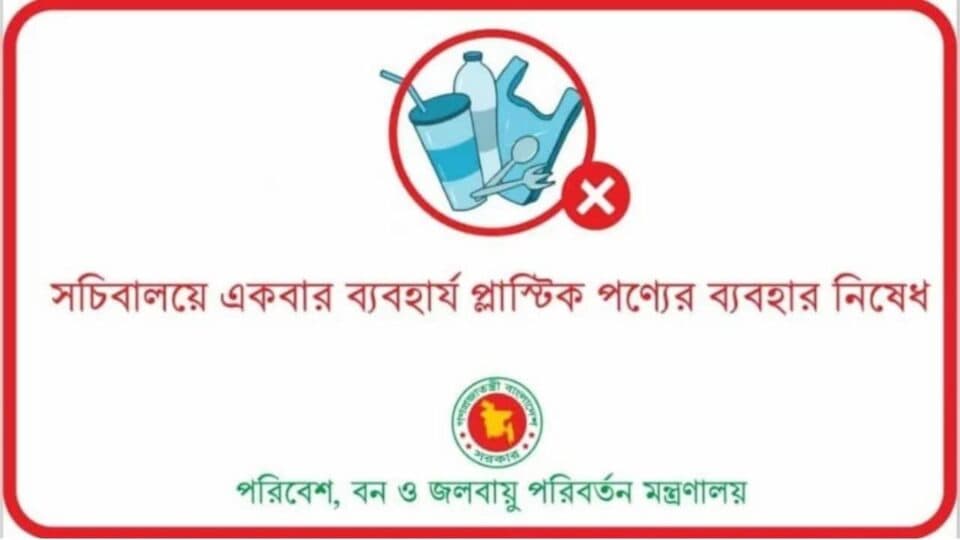
On 9 October 2026, the Ministry of Environment, Forest and Climate Change, Bangladesh, banned single-use plastic products in all ministries, directorates, government and semi-government offices, and independent institutions.
This cleanup drive within the administration has been initiated against the backdrop of rising plastic pollution worldwide.
Key Aspects of the Directive and Alternative Measures: The ministry’s new notification places special emphasis on using eco-friendly materials in official operations:
Discontinuation of Plastic Files, Folders, and Bottles: The use of plastic files, pens, folders, or plastic sheets in government offices is now prohibited. Instead, instructions have been issued to use jute-based handicrafts, paper, or reusable, eco-friendly folders.
Furthermore, for meetings or seminars, arrangements must be made to provide drinking water in glass or metal containers rather than single-use plastic bottles or cups.
Waste Management and Monitoring Cell: A special monitoring committee has been formed in every office to oversee the removal and proper management of plastic waste; this committee will supervise the implementation of the order at the field level starting next week.
Conclusion and Green Page Perspective: Such a strict and exemplary initiative at the government level in the fight against plastic pollution is highly commendable.
Green Page believes that to save our rivers and nature from plastic, we must completely stop using single-use plastics across the nation—not only in government offices but also by educating the public.