
The world is losing many species, and ecosystems are getting worse, which affects human health that depends a lot on nature. The United Nations Environment Program (UNEP) has given a new warning to everyone: nature is in big trouble. Addressing this crisis requires more than just promises; it demands rapid, effective, and meaningful implementation.
On 26 October 2026, the UNEP webpage “Updates on nature, land and biodiversity” reported that around one million of the eight million plant and animal species are in danger of dying out. Furthermore, the degradation of ecosystems is undermining the well-being of nearly 40 percent of the global population.
In this setting, at the UN Biodiversity Conference (COP-17) in Yerevan, Armenia, countries are looking at how far they have come with the Kunming-Montreal Global Biodiversity Framework and talking about ways to speed up progress toward the 2030 goals.
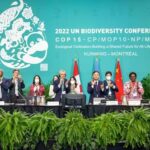
UNEP notes that this COP marks the first time countries have collectively reviewed progress on the Kunming-Montreal Framework. Adopted in 2022, this global framework includes 23 targets, one of which aims to conserve and restore 30 percent of the world’s degraded terrestrial and marine ecosystems by 2030. However, many countries have yet to make sufficient progress toward this goal.
Key Messages and Conference Priorities: UNEP’s update on 26 October shows new stress on global biodiversity rules.
From Promises to Concrete Action:
UNEP and its partners emphasize that mere declarations to protect biodiversity are no longer enough. It is important that local communities, Indigenous peoples, women, and vulnerable groups are involved in making and carrying out policies because they are the most impacted by the loss of biodiversity.
Leveraging Finance and Private Investment:
During the ‘Finance and Biodiversity Day’—held concurrently—the UNEP emphasized the need to effectively utilize new financial instruments and models to support biodiversity conservation. It was also stressed that investments should not be driven solely by profit; rather, they must contribute to equitable and inclusive conservation efforts.
Rights-Based Conservation Approaches:
In another discussion, the UNEP highlighted that rights-based approaches are essential for implementing the Kunming-Montreal Global Biodiversity Framework. Effective conservation cannot be achieved without environmental justice, human rights, accountability, and the active participation of local communities.
Regional and International Coordination:
The UNEP also said that working together regionally is key to protecting coastal areas, shared habitats, migratory species, and common ecosystems, since water and land areas cross national borders.
Current global situation and concerns: Recent updates from the UNEP show that the world faces a biodiversity crisis. This problem goes beyond cutting down trees or losing species. It affects water safety, food supplies, health, the economy, and how we deal with climate change.
The degradation of natural ecosystems is having a profound impact on human livelihoods, nutrition, disaster resilience, and mental well-being. Experts point out that climate change, land degradation, pollution, and biodiversity loss are interconnected crises that cannot be resolved in isolation.
The UNEP’s message is simple: protecting nature should be seen as part of a united global effort, not as separate tasks. Achieving the 2030 targets will be difficult unless there is a strong alignment between national policies, financing, research, and local-level participation. Significance of the Yerevan COP17:
According to the UNEP, the COP17 conference in Yerevan serves as a mid-term assessment of the Kunming-Montreal Framework. We need to decide now how far nations have come toward their 2030 targets, what gaps still exist, and how to solve them quickly. The conference is exploring an accelerated roadmap known as the “Yerevan Pathway,” which could shape future international biodiversity policy.
Experts caution that if this roadmap remains merely on paper, it will lead to further delays. If countries join forces on funding, changing policies, helping local communities, and fixing infrastructure, they can really make progress in saving biodiversity.
Conclusion and Green Page Perspective: Green Page believes that the UNEP update from 26 October 2026 delivers a clear message to the world: the time to protect nature is now.
Tackling the loss of biodiversity, the damage to ecosystems, and the issues affecting human well-being needs more than meetings; it needs real action, enough money, and conservation policies that respect rights. To ensure the success of the Kunming-Montreal Framework, every nation must now decisively shift its national policies and budgets toward the protection of nature.