

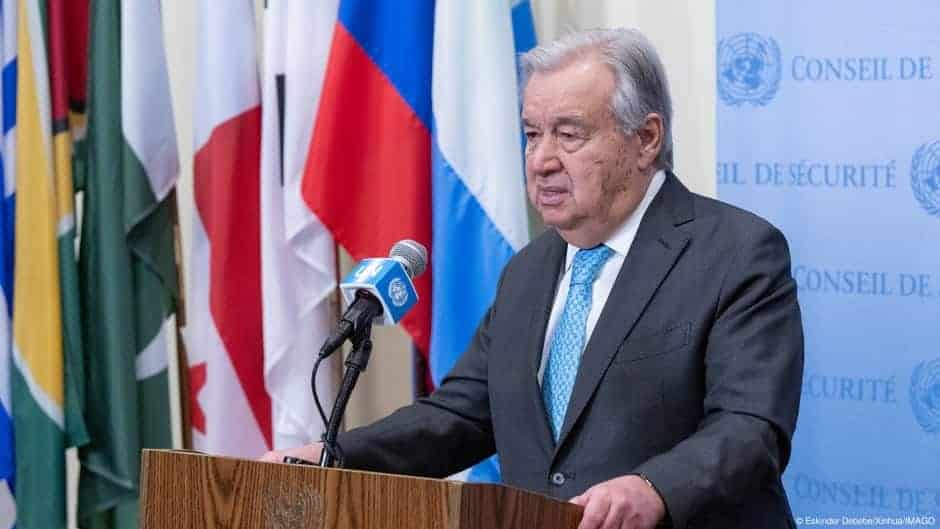
The United Nations has issued a fresh, urgent call to finalize a global agreement for a rapid transition away from fossil fuels to curb global warming.
In a historic address at the ‘Leaders’ Summit’ of COP31 in Antalya, Turkey, on 11 November 2026, UN Secretary-General António Guterres issued a stark warning: global average temperatures have already reached extreme levels, and the clock is ticking toward catastrophic planetary change. He called for a worldwide agreement to end fossil fuels and use green energy instead, trying to stop the world from getting more than 2.5°C hotter.
Global Agenda and Negotiations: Key challenges and potential new agreements under discussion at the conference include:
National Standards for Phasing out Fossil Fuels: Climate experts have warned that even if current global Nationally Determined Contributions (NDC) commitments are fully met, the world is still on track to exceed 2.5°C of warming by the end of the century. Consequently, the development of a legal roadmap to rapidly reduce the use of coal, oil, and gas has taken center stage in the COP31 negotiations.
Demands from Pacific Island Nations and Youth Activists: In a meeting in the ‘Blue Zone’—with famous climate activists and young people—there were urgent calls for climate justice for regions that can be harmed by rising sea levels.
Conclusion and ‘Green page’ Perspective: Discussing climate adaptation while continuing to rely on fossil fuels is entirely meaningless.
Green Page believes that if the UN Secretary-General’s serious warning is not added to the final COP31 document as a must-follow policy for ‘fossil-fuel phase-out,’ delta regions vulnerable to climate change, like in South Asia, will be in danger.