

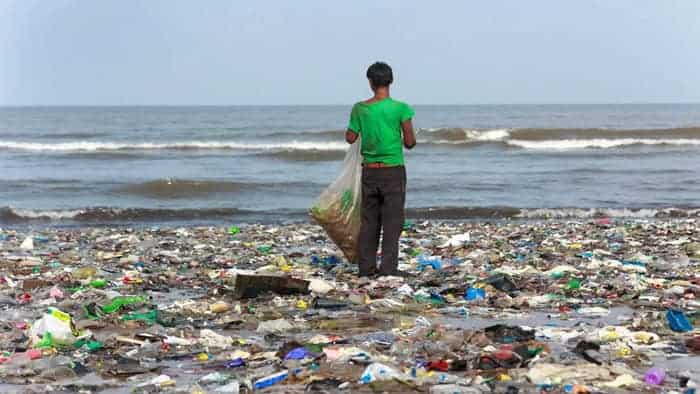
Plastic pollution worldwide has reached such a level that microplastic particles are being found from polar ice to human blood. To stop this global scourge, efforts have been underway since 2022 under the United Nations to create a legally binding “Global Plastic Treaty.”
As of the latest information in May 2026, following the INC-5.3 session held in Geneva, Switzerland, new leadership was elected, but sharp disagreements have emerged among major countries over financing and production reduction.
Petro‑states versus the High Ambition Coalition: The core conflict in this treaty is essentially between two camps. The “High Ambition Coalition,” led by Norway and Rwanda, wants to completely limit new plastic production by 2040 and ban single‑use plastics. On the other hand, the world’s major oil‑producing countries (the petro‑states) strongly oppose any ban or cap on production, because plastics are primarily made from fossil fuels.
Funding uncertainty and the current crisis: In mid‑May 2026, one of the treaty’s main backers, Norway, announced it was reassessing its funding to the United Nations Environment Programme (UNEP). As a result, the multi‑million‑dollar projects for plastic waste management in developing countries are being temporarily halted.
New technological solutions: Outside the political complexities of the treaty, scientists have not been idle. Artificial intelligence (AI) and drone technologies are now being used to map ocean waste. Fully biodegradable “bio‑plastics” made from marine algae and mushrooms have also begun to enter the commercial market.
The next and final round of negotiations on the plastic treaty is scheduled for early 2027. To free the world from the scourge of plastic, it is time to rise above political interests and adopt a strong, internationally enforceable law.