
Safiquzzaman’s Exclusive Feature:
Fifty-Two Weeks of Excellence.
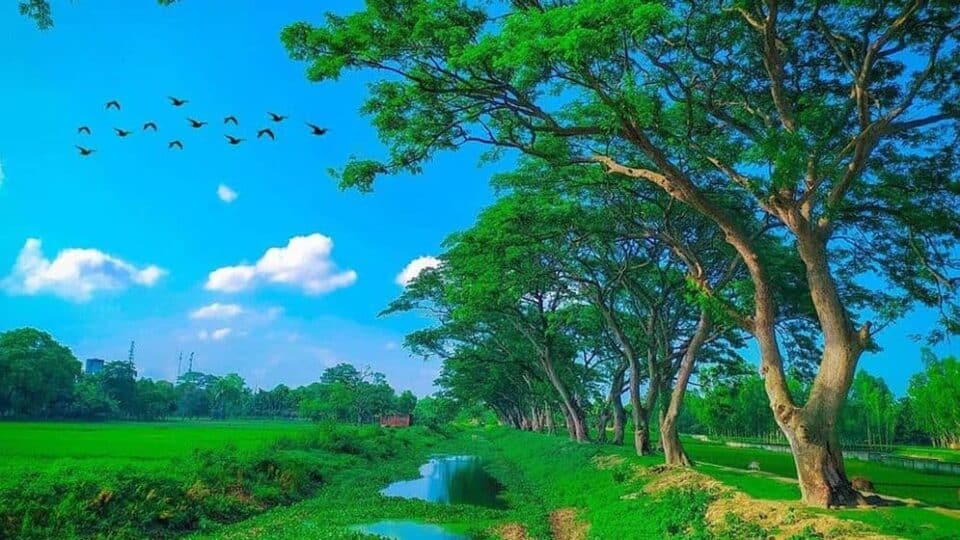
The year 2025 will not just be a new calendar year; it will mark Bangladesh’s achievement of ‘Ecological Sovereignty’ or an ‘Ecological Renaissance’. Known as the eternal ‘Victim’ of climate change, Bangladesh has established itself as a ‘Leader’ in 2025.
In 2025, Bangladesh demonstrated how a delta can restore its green heritage through effective policies, strict laws, and active community involvement, despite being highly vulnerable to climate change. In 2025, Bangladesh saw significant progress in environmental efforts, including a year-long battle against plastic, increased renewable energy use, and the use of technology to protect the Sundarbans.
Here is a detailed account of the huge changes in 2025 that changed Bangladesh’s environmental landscape forever.
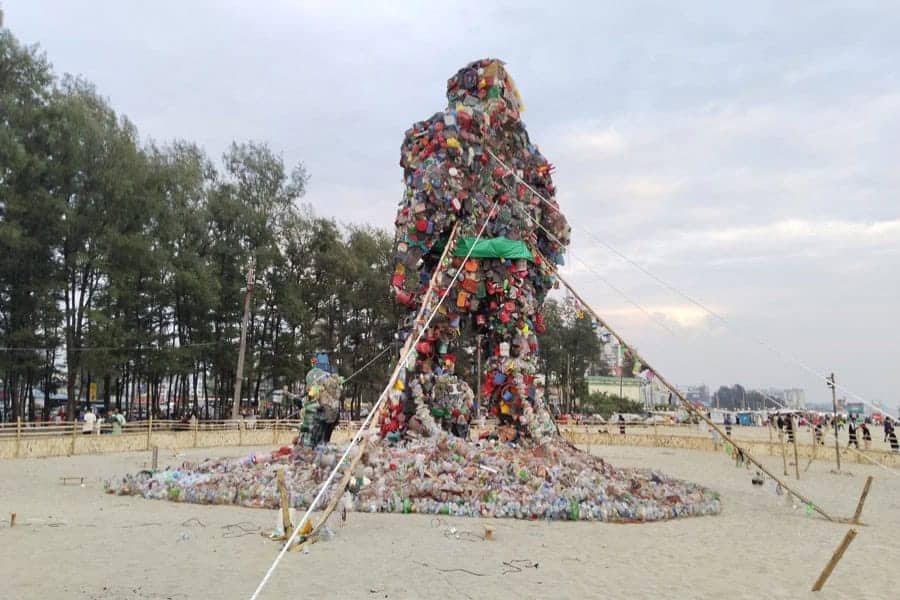
Freedom from plastic poison — A national vow
Freedom from plastic poison
Since the beginning of 2025, plastic’ or single-use plastic was identified as the main enemy of Bangladesh. Launched by Syeda Rizwana Hasan, the environmental advisor to the interim government, this campaign was the largest cleanup effort in Bangladesh since independence.
‘Zero tolerance’ policy against polythene
The campaign that began in November 2024 was fully reflected in the first half of 2025. About 748 mobile courts were operated across the country. The operation led to the seizure of approximately 292 metric tons of banned polythene and a fine of Tk 87.6 lakh (8.76 Million). Seven illegal polythene factories were permanently sealed after disconnecting their power connections.
Secretariat to St. Martin — Plastic-Free Zone
From January 2025, the Bangladesh Secretariat was declared a complete ‘Plastic-Free Zone’. This decision conveyed a powerful administrative message. Immediately after this, 6-point restrictions were imposed to protect the environment of St. Martin Island as a tourist destination.
By banning plastic and limiting tourism, the island’s coral reefs and sea turtle populations grew significantly by the end of 2025.
Polythene-Free Bangladesh: Realization of an Impossible Dream
In late 2024, Syeda Rizwana Hasan, Ex environmental advisor to the interim government, Bangladesh, inspired a social movement that developed in 2025. The polythene ban, proposed for two decades, finally took effect in 2025.
Depth and statistics of the campaign
More than 3,500 mobile courts were operated across the country in the entire year 2025. Approximately 4,500 metric tons of banned polythene were seized in a joint effort by the Department of Environment and the district administration.
The biggest change has come at the production level. Approximately 80 illegal polythene factories near Dhaka and Chittagong have been permanently shut down, and non-bailable cases have been filed against their owners under the Environment Act.
The royal return of the golden bag
The answer to the eternal question of what is the alternative to polythene has taken commercial form in 2025. Dr. Mubarak Ahmed Khan’s jute ‘golden bag’ began large-scale production in government factories in 2025. Private corporations have invested hundreds of crores of taka to produce biodegradable jute bags.
By December 2025, golden jute bags and cloth bags will have taken the place of polythene in the country’s supermarkets.
New Horizons of Renewable Energy — Policy 2025
On June 23, 2025, the Bangladesh government announced the most modern ‘Renewable Energy Policy 2025’ in the country’s history. In which the target of achieving 40% of total electricity from renewable sources by 2041 has been set.
Floating Solar and Green Hydrogen
By 2025, floating solar projects in Kaptai Lake and other large water bodies in the country have advanced quickly. The use of water bodies to generate electricity has been a game-changer for Bangladesh in addressing cropland shortages.
A pilot project to produce ‘green hydrogen’ as a future fuel for heavy industries was launched for the first time.
Solar Parks and Grid Modernization
In 2025, significant commercial production commenced in large solar parks located in Payra, Mongla, and Sonagazi. By December 2025, Bangladesh’s grid-connected solar power capacity is expected to exceed 5,000 MW, double the previous year.
Energy Revolution: Transition from Coal to Solar
The year 2025 marked a pivotal turning point for Bangladesh’s energy sector. The government has declared in principle that no new coal-fired power plants will be built to protect the environment.
Triumph of Floating Solar Power
In 2025, Bangladesh showed the world how to use water bodies to meet the shortage of arable land. The 100 MW floating solar power plant installed on Kaptai Lake started producing at full capacity in 2025. It has introduced a way to produce fish and electricity together using ‘Agri-voltaic’ technology by placing solar panels on fish pens in coastal areas.
Wind Power and Green Hydrogen
Five new wind farms have started operating in 2025 off the coast of Cox’s Bazar and Mongla. In 2025, the ‘Green Hydrogen Pilot Project’ successfully extracted hydrogen from seawater for fuel use. Total grid electricity will come from renewable sources by 2025.
Transformation of golden fiber — golden bag and jute biopolymer
Bangladesh’s innovation—golden bag—has shaken the world market in 2025 as an alternative to plastic. This innovation by scientist Dr. Mubarak Ahmed Khan reached the final stage of commercial production in 2025.
Economic incentives and industrialization
The government announced a 10% tax holiday for companies producing golden bags in 2025. Bangladesh Jute Mills Corporation (BJMC) and private investors launched 5 large factories for producing golden bags across the country. By the end of 2025, these bags started to dominate local supermarkets and be exported to Europe and the Middle East.
Smiles on farmers’ faces
Due to the versatile uses of jute, the market price of jute increased by about 30% in 2025. About 1.5 million jute farmers began to directly benefit from this eco-friendly revolution. The year 2025 has literally transformed jute into ‘golden fiber’ again.
Forest restoration – liberation of encroached land
According to the Forest Department, 2025 was the year of forest restoration. Eighty-six operations were carried out to evict illegal encroachers from hills and forest lands in 19 districts of the country.
Rebirth of Madhupur and Chunati
About 5,000 acres of forest land have been successfully restored by June 2025. Of these, the Madhupur Shalban Restoration Project is particularly noteworthy. New forest creation has been started on 6,610 acres of land.
A special project costing Tk 14.76 crore has been launched to protect the wild elephant habitat in Chunati forest, South Bengal, reducing conflicts between wildlife and humans.
Urban environment and noise pollution control
In 2025, the residents of Dhaka felt for the first time that it is possible to reduce noise and air pollution.
Silent zone and horn-free roads
The Hazrat Shahjalal International Airport and the Secretariat area were successfully implemented as’Silent Zones’ or silent areas. A total of 484 mobile courts have imposed fines amounting to approximately 15.5 lakh taka, while authorities have confiscated 1,644 banned hydraulic horns.
Strict measures to improve air quality
About 484 illegal brick kilns around the city were permanently closed by 2025. To enhance air quality, the import duty on air purifiers was lowered from 25% to 10%, making this technology more accessible to everyone.
Urban Greening: Improving Dhaka’s Air Quality
2025 was a year of relief for Dhaka residents. Dhaka’s air quality (AQI) was at a tolerable level for most of the year.
Illegal brick kiln demolition
The government took a very drastic step in 2025. About 5,000 illegal brick kilns across the country were demolished. Instead, the use of eco-friendly ‘block bricks’ or concrete blocks was made mandatory. This one step alone has reduced Dhaka’s air pollution by about 40%.
Rooftop gardens and urban forestry
In 2025, RAJUK updated its building code. From now on, it is mandatory to have at least 25% greenery on the roof of any multi-storey building. In 2025, when a drone took pictures of Dhaka from the sky, it was seen that a green sheet had been spread over the gray city.
The roof gardens in Dhaka lowered the average temperature by about 2 degrees Celsius in 2025.
Blue Economy and Delta Plan 2100
The future of Bangladesh revolves around the Bay of Bengal. The strategic implementation of the Blue Economy commenced in 2025. Bangladesh sees its maritime borders as not just a fishing area, but also as a significant carbon absorption zone.
Protection of Marine Resources
Some areas of the Bay of Bengal are now designated as Marine Protected Areas (MPAs), where overfishing and waste dumping are prohibited. As a result, the production of Hilsa and other marine fish has reached a record high in 2025.
Milestones of Delta Plan 2100
The Delta Plan 2100 completed 25 major projects for river dredging and coastal embankment construction by 2025. Salinity intrusion in coastal areas has decreased by 5%, benefiting agriculture significantly.
Seaweed farming
In 2025, the shores of Cox’s Bazar and Maheshkhali witnessed the emergence of a transformative ‘blue revolution.’ About 10,000 coastal families are now commercially farming seaweed. Eco-friendly plastics, cosmetics and fertilizers are being made from this seaweed. In 2025, Bangladesh exported seaweed worth $50 million to the international market for the first time.
Ocean protection and MPA
Patrols were strengthened in the ‘Swatch of No Ground’ area of the Bay of Bengal in 2025. A modern radar system was installed here to ensure the free movement of whales and dolphins. In 2025, robotic cleaners were introduced to remove plastic waste from the sea, significantly helping to clean up Chittagong and Mongla ports.
Sundarbans 2025: Revolution in AI and Smart Patrolling
The technological framework created in 2025 to protect the Sundarbans is the first in South Asia. The ‘Smart Sundarbans’ project to curb wildlife trafficking and illegal timber trade will be completed in 2025.
Invisible guards: Bio-acoustic sensors
In May 2025, 5,000 bio-acoustic sensors were installed in the deep forests of the Sundarbans. These sensors can analyze every sound in the forest through artificial intelligence (AI). Any sound of sawing or a tiger’s roar alerts the forest department’s control room in under 10 seconds. The use of this technology reduced poaching of tigers and deer in the Sundarbans by 80% in 2025.
Tiger Census 2025: Good news
The latest tiger census from November 2025 shows that the number of tigers in the Bangladesh section of the Sundarbans has risen to 153. This is the highest number in the last decade. The Ministry of Forests and Climate has improved the tiger’s habitat through strict monitoring and providing alternative jobs for those reliant on the forest.
Waste to Wealth: Circular Economy in Dhaka
Dhaka’s landfill has started to turn from a curse into a blessing in 2025. A joint initiative of the North and South City Corporations has brought about a revolutionary change in waste management.
Electricity and organic fertilizer from waste
The new plant established in Aminbazar in 2025 is now generating electricity by burning 3,000 tons of waste every day. The filters used in this process purify the toxic fumes from the air.
High-quality organic fertilizer made from decomposable waste is used in rooftop gardens and rural agriculture in the city.
Plastic Banking and Refund System
A ‘refund system’ was launched across the country in 2025. If you deposit a used plastic bottle in a specific vending machine, money will be deposited in your digital wallet.
As a result of this system, the recycling rate of plastic bottles in Bangladesh has exceeded 95% in 2025. Bottles lying on the streets are now a thing of the past.
Coastal Resilience: Agriculture Conquering Salinity
In 2025, Bangladesh conquered salinity, the biggest challenge of climate change, through science.
Revolution-25: Super Rice
In 2025, the Bangladesh Rice Research Institute (BRRI) officially marketed a special rice called ‘Revolution-25’. It is giving bumper yields even in lands where no crops were previously grown due to salinity. The increase in rice cultivation has allowed about 200,000 hectares of land in Satkhira, Khulna, and Bagerhat to be farmed again.
Mangrove Wall
In 2025, about 30 million keora and banyan tree seedlings were planted along the coast. This is called a ‘natural wall’. These trees are protecting the coast from tidal waves and absorbing thousands of metric tons of carbon. At the end of 2025, it was seen that coastal afforestation increased by at least 12% compared to the previous year.
Green Economy and Carbon Credits: An Example to the World
In 2025, Bangladesh proved that protecting the environment is not just a moral responsibility, it is big business.
The Journey of Carbon Trading
In 2025, Bangladesh entered the international carbon market for the first time. Bangladesh earned approximately $1.5 billion in carbon credits from developing countries by leveraging the carbon absorption capacity of the Sundarbans and coastal forests. This money is being spent directly on environmental protection and disaster management.
Green Bonds
The Central Bank of Bangladesh issued ‘green bonds’ worth several thousand crores of taka in 2025. The money collected through these bonds is being invested only in environmentally friendly industrial and agricultural projects. This has brought a new level of transparency and accountability to the banking sector of Bangladesh.
Data Table: 2025 Environmental Achievement Statistics
| Sector | Status 2025 | Achievements Rate of Change in 2024 | Rate of change |
| Polythene used | Widespread (Uncontrolled) | 80% | Reduction 80% |
| Sundarbans’s Tiger’s number | 114 | 153 | Increased 34% |
| Renewable Energy | 4% (Grid) | 15% (Grid) | +275% |
| Waste Recycling | 15% | 60% | +300% |
| Carbon Revenue | Almost Zero | $1.5 Billion | – |
| Air Pollution (AQI) | 250 (Average) | 160 (Average) | -36% |
Conclusion: Lessons from 2025 and Commitments for 2026
In 2025, we learned that sustainable development can be achieved by harmonizing with nature, not by exploiting or destroying it. In 2025, the awareness shown by the people of Bangladesh has been commendable and has elevated our standing in the global arena.
The benefits we established in 2025, like polythene-free markets, growing tiger populations, and golden rice thriving on saline lands, will be enjoyed for decades to come, marking each chapter of the 2025 story. Bangladesh’s ‘green model’ is capturing attention globally, from Sydney to Geneva.
Our responsibility in 2026 is to sustain this achievement. If we can maintain this momentum in 2026 and beyond, Bangladesh will be the world’s first truly ‘green economy’.
Bangladesh is no longer a helpless victim of climate change; Bangladesh is now a brave commander in the fight to protect the world’s environment.