

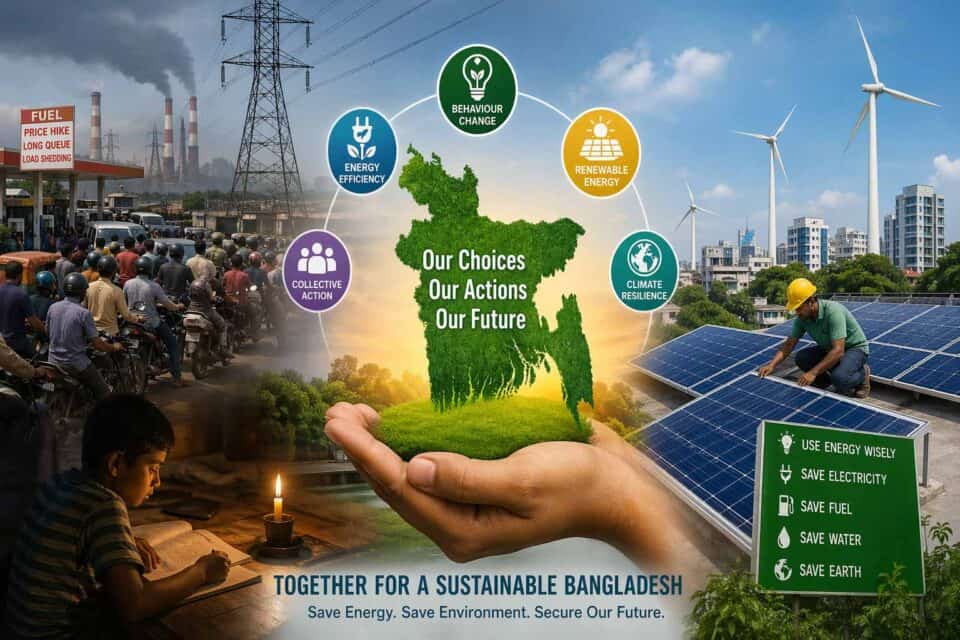
Bangladesh stands at a crucial crossroads where three interconnected challenges—fuel crisis, unsustainable energy consumption and climate change are joining with increasing intensity. The current fuel shortages, long queues at petrol pumps, rising electricity costs and frequent load shedding are not isolated events; they are symptoms of a deeper structural issue rooted in fossil fuel dependence and inefficient energy use.
At the same time, Bangladesh remains one of the most climate-vulnerable countries in the world. This dual challenge demands urgent attention, not only through policy and technology but most importantly, through a transformation in human behaviour.
The Fuel Crisis: A Wake-Up Call
The ongoing fuel crisis in Bangladesh has been exacerbated by global geopolitical tensions, including conflicts affecting major oil-producing regions. As a country that relies heavily on imported fossil fuels such as oil, coal and liquefied natural gas (LNG), Bangladesh is highly exposed to global market volatility. Any disruption in supply chains or increase in international prices directly impacts the national economy.
In recent months, the situation has become increasingly visible. Long lines at petrol pumps, increased fuel prices and widespread electricity shortages have affected daily life. Industries are struggling to maintain production, agricultural activities are being disrupted and households are facing uncertainty due to frequent power outages.
This crisis highlights a fundamental truth: fossil fuels are finite, expensive and unreliable in the long term. Continuing on this path will only deepen economic vulnerability and energy insecurity.
Climate Change: The Bigger Picture
While the fuel crisis is immediate, climate change represents a long-term and existential threat. Bangladesh is already experiencing the impacts—rising sea levels, more intense cyclones, salinity intrusion, heatwaves and unpredictable weather patterns. These changes affect agriculture, water resources, livelihoods and overall human security.
Unluckily, the same fossil fuels that are driving the current energy crisis are also major contributors to climate change. Burning coal, oil and gas releases greenhouse gases that trap heat in the atmosphere which leading to global warming. Thus, the fuel crisis and climate crisis are closely linked.
Addressing one without considering the other would be incomplete. A sustainable solution must reduce dependence on fossil fuels while promoting cleaner, renewable energy sources.
Behaviour Change: The Missing Link
While policy reforms and technological advancements are essential, they often take time and require significant investment. In contrast, behaviour change is immediate, cost-effective and highly impactful. Unfortunately, it remains the most neglected aspect of energy management. Behaviour change in energy use goes beyond simple awareness—it requires a shift in daily habits, social norms and decision-making processes.
In Bangladesh, a large portion of energy waste comes from everyday practices that are driven more by habit than necessity. In offices, meetings and training sessions, it is common to see lights turned on during the daytime while curtains block natural sunlight. Similarly, air conditioners are used excessively, often set at very low temperatures (18–20°C), not because it is required, but because cooler is perceived as better. Even when natural ventilation or fans could provide adequate comfort, energy-intensive cooling is preferred.
In households, similar patterns exist. Lights, fans and televisions are often left running in empty rooms. Gas stoves are sometimes used unnecessarily—for instance, to dry clothes or kept on longer than needed. Water is frequently wasted during bathing, washing or car cleaning, even though water supply and treatment also consume energy. These practices may seem minor individually but collectively they result in significant energy loss.
Beyond homes and offices, commercial and social behaviour also contributes to the problem. Brightly lit signboards, shopping malls and decorative lighting in events or celebrations are often maintained for long hours for visibility or prestige, even during times of energy shortage. Such practices reflect a culture where higher energy use is associated with comfort, status or convenience.
Changing these behaviours does not require advanced technology or large investments. It requires awareness, responsibility and a collective shift in mindset—from careless consumption to conscious and efficient use. For example, offices can adopt policies to maximize natural light and set standard AC temperatures, households can ensure appliances are switched off when not in use and communities can promote energy-smart events with minimal lighting. Schools, media and institutions can further reinforce these practices by making energy conservation a shared social value.
Ultimately, behaviour change is about recognizing that small individual actions, when multiplied across millions of users, can create a significant national impact. In the face of a fuel crisis and growing climate risks, responsible energy use is not just a personal choice—it is a collective responsibility.
Energy Efficiency and Renewable Energy
To address both the fuel crisis and climate change, Bangladesh must accelerate efforts in energy efficiency and renewable energy, as these two approaches work hand in hand. Energy efficiency reduces overall demand, while renewable energy provides a cleaner and more sustainable supply.
Energy efficiency means using less energy to perform the same tasks. This can be achieved by using energy-rated appliances such as LED lights and inverter ACs, improving building design with better ventilation and natural lighting and enhancing industrial processes through efficient machinery and energy audits. These measures can significantly reduce electricity consumption without affecting comfort or productivity.
At the same time, renewable energy offers a long-term solution to reduce dependence on imported fossil fuels. Bangladesh has strong potential in solar energy, especially through rooftop solar systems in urban areas and solar solutions in rural communities. Expanding renewables not only improves energy security but also reduces greenhouse gas emissions.
However, both efficiency and renewable energy depend on proper behaviour. Using efficient appliances carelessly still wastes energy, and renewable systems like solar require mindful use and maintenance. Therefore, technology must be supported by responsible behaviour to achieve real impact.
A Call for Collective Action
The challenges of fuel crisis and climate change are too large to be addressed by any single actor—they require a united and collective response from government, institutions, communities and individuals. This is not only an energy issue; it is a shared national responsibility that demands immediate and coordinated action. Policies and technologies can set the direction but real change will only happen when people adopt responsible behaviours in their daily lives.
At this critical moment, priority must be given to raising awareness about energy conservation, promoting efficient and mindful consumption and discouraging non-essential and luxury energy use—especially during peak crisis periods. At the same time, efforts to expand renewable energy and adopt energy-efficient technologies must be strengthened and supported at all levels. Ensuring fair and equitable access to energy is equally important, so that no group suffers disproportionately due to the actions of others.
Educational institutions, media, religious leaders and community organizations have a vital role in shaping public attitudes and influencing behaviour. By promoting a culture of responsibility, moderation and sustainability, they can help transform how energy is perceived and used in society.
Ultimately, the path forward depends on collective awareness and action. Every small step—switching off unnecessary lights, reducing excessive cooling, avoiding waste—adds up to a larger national impact. In a time of crisis, responsible energy use is not just a personal choice; it is a duty to the country and to future generations.
In conclusion, Bangladesh is at a defining moment. The fuel crisis has exposed the fragility of a fossil fuel-dependent system, while climate change continues to intensify risks to livelihoods and development. Addressing these challenges requires more than infrastructure and policy—it demands a shift in mindset. Behaviour change, supported by energy efficiency and renewable energy, offers a practical and immediate pathway forward.
Every small action matters. When multiplied across millions of people, these actions can significantly reduce energy demand, ease the pressure on fuel resources, and contribute to climate resilience. The path to energy security and sustainability lies in collective awareness and shared responsibility. The choices we make today will shape the future of Bangladesh—making it more resilient, equitable and sustainable for generations to come.
Author
Md. Ashrafuzzaman Khan
Interim Coordinator – Resilience Building
Climate Change Program
Christian Commission for Development in Bangladesh (CCDB)