

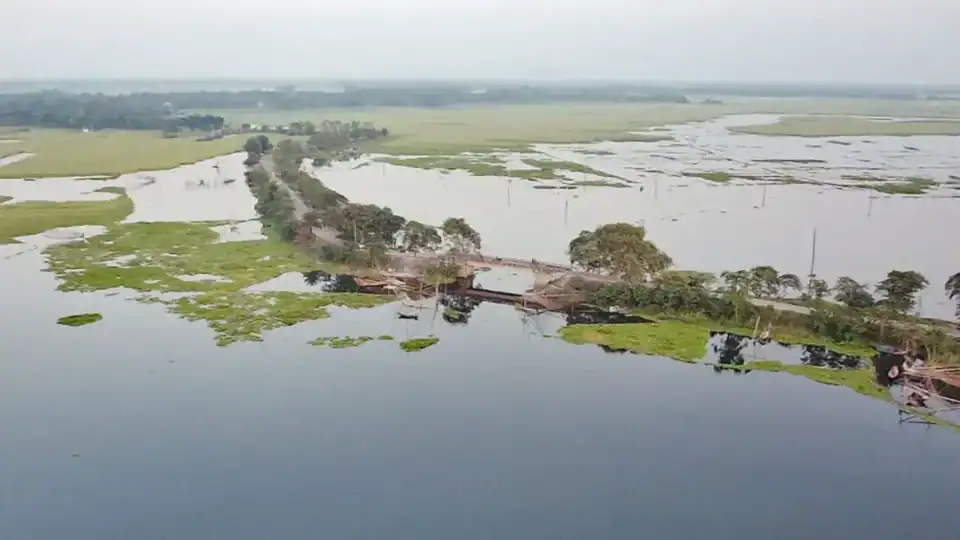
Cholonbeel, Bangladesh’s largest beel (wetland) and the biodiversity heart of the northern region, has been facing multiple crises for decades. Due to the harmful effects of climate change, unplanned embankment construction, and human‑caused encroachment, the existence of this wetland is now under threat.
However, as of May 2026, local popular movements and a coordinated mega‑project by the government’s Ministry of Environment are offering new hope for saving Cholonbeel.
Depth of the crisis and environmental degradation: Once a safe refuge for native fish and migratory birds, the extensive Cholonbeel spanning Pabna, Natore, and Sirajganj districts is now in peril.
A recent environmental survey found that about 60% of the wetland has been silted up and filled, and its water‑holding capacity has fallen alarmingly. Cultivating the wetland’s bed during the dry season has further lowered the groundwater table.
Environmentalists warn that if Cholonbeel dries up, the climate of the entire northern region will become severely destabilized, with serious consequences for the country’s overall agricultural production.
Master plan and eco‑restoration in 2026: In May of this year the Executive Committee of the National Economic Council (ECNEC) approved a new eco‑restoration project to recover Cholonbeel. The main components of the project include:
- Removal of illegal structures: Eviction of all illegal embankments and permanent fishing enclosures inside the wetland.
- Re‑excavation of rivers and canals: Restoring the navigability and flow of the main rivers and internal canals that bring water into Cholonbeel.
- Community‑based conservation: Forming wetland Protection Committees composed of local fishers and farmers to enforce fishing bans during breeding seasons and to prevent bird hunting.
Cholonbeel is more than a waterbody; it is the lung that maintains ecological balance in northern Bangladesh. If the new government and community initiatives of 2026 are implemented successfully, they will mark a milestone in the history of Bangladesh’s wetland management.