
A good city should be more than just a place to sleep. It needs to offer important things like food, water, clean toilets, public transport, schools, healthcare, and parks.
Ensuring affordable housing for low- and middle-income populations requires the active participation of the private sector. Simultaneously, planned urban development must be prioritized, including the preservation of water bodies, green spaces, and open areas, while fostering civic engagement.
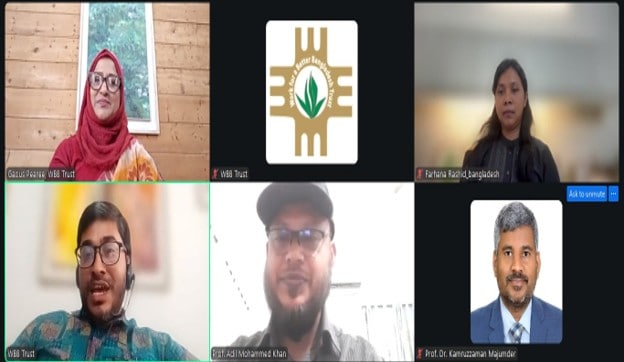
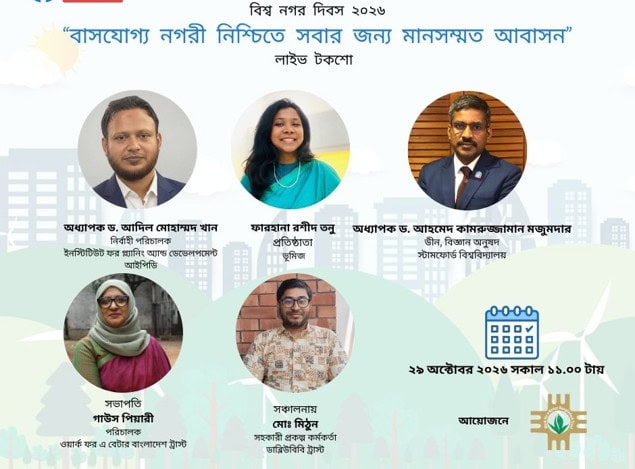
On October 29, 2026, at 11:00 AM, ‘Work for a Better Bangladesh Trust’ hosted a talk show titled “Livable Cities: Quality Housing for All.” Participants included Gaus Peari, Co-founder of ‘Work for a Better Bangladesh Trust’; Md. Mimun, Project Director; Dr. Adil Mohammed Khan, head of the Institute for Planning and Development (IPD); Dr. Ahmed Kamruzzaman Majumder, a university teacher; and Farhana Rashid, who started ‘Bhumij'(Press Release).
Dr. Adil Mohammed Khan pointed out that allowing commercial developers to manage housing has made it more expensive for many low- and middle-income individuals to find affordable homes. Housing means more than just a roof; it involves getting food, water, sanitation, waste services, public transit, schooling, health services, playgrounds, and public areas.
The government needs to make clear housing plans to ensure everyone can afford a home. They should also help businesses work together with public groups to get more private investment. Relying only on private companies won’t help low- and middle-income groups. The government needs to be involved in making rules, creating policies, and providing funds. Mandating that 20 percent of large private housing projects be allocated for affordable housing is a measure that might face strong opposition.
Dr. Ahmed Kamruzzaman Majumder says that although development plans seem to be made for the people, the people often face the adverse effects of this “development.” Urban growth, more cars, and the disappearance of water and green areas are hurting city life and making it less pleasant. This leads to the “urban heat island” effect.
Therefore, the focus should not merely be on new projects; it is essential to restore and preserve existing water bodies and open green spaces. Development planning must priorities greening and nature-based solutions. Regulations governing open spaces must be strictly enforced. Public spaces like Zia Udyan, Chandrima Udyan, and Osmani Udyan should be kept green rather than covered in concrete. Achieving this requires a collaborative effort between the government, civil society, and the general public.
Farhana Rashid Tanu points out that efforts and advocacy regarding public toilets and sanitation—ongoing since 2016–2017—still lack a cohesive, integrated plan. It is not enough to simply build toilets; one must address the entire ecosystem, including infrastructure, user needs, management, maintenance, and quality standards. A lot of public toilets are not usable.
That’s why maintaining them and ensuring they meet quality standards is as important as the original building. Currently, the government often relies on a leasing model for public toilets, which can lead to higher costs for users. There must be mechanisms for public participation in decision-making, along with clear accountability. At the same time, citizens have a right to quality services, while also bearing the responsibility of keeping the facilities clean.
To make a city truly livable, citizens must organize into strong, vocal groups capable of influencing policy. The state must uphold the rights of citizens—such as the right to walk—and priorities the needs of the general public when formulating urban development plans. Inclusive city planning must be done so that everyone in society—such as children, older people, and those with disabilities—can reach schools, parks, and public areas.
It is essential to effectively enforce existing laws and regulations concerning the rights of pedestrians. Focusing on the real needs of the people can help the government and citizens work together to make a good, educational, and enjoyable city.