

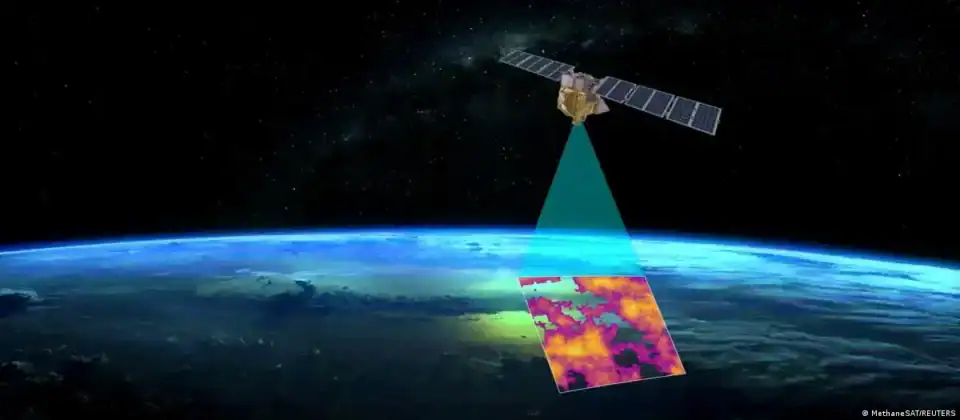
AI’s strict surveillance in the sky
Methane gas is a greenhouse gas 80 times more powerful than carbon dioxide. But until now, it has been difficult to find out where this gas is leaking from.
In February 2026, NASA and SpaceX launched ‘methane tracker’ satellites that can detect gas leaks globally in real time. This is a huge step in climate monitoring by 2026.
These satellites use hyper-spectral imaging technology. If methane leaks from an oil pipeline in a remote area of a country, it is detected within a few seconds through AI or artificial intelligence and notified to the relevant authorities.
Since the beginning of 2026, this surveillance has reduced the amount of methane leaks worldwide by 10%. This has closed the opportunity for companies to evade.
Economically, it has created a kind of ‘accountability’ for countries. Countries that fail to reduce methane emissions are being fined heavily under the new international rules of 2026.
On the other hand, those who are repairing leaks quickly are getting green bond benefits. As a result of this technology, methane gas is no longer an ‘invisible enemy’ in 2026. Space’s vigilant eyes are continuously monitoring Earth’s environment, both day and night. This proves that transparency can only be brought about through technology.