

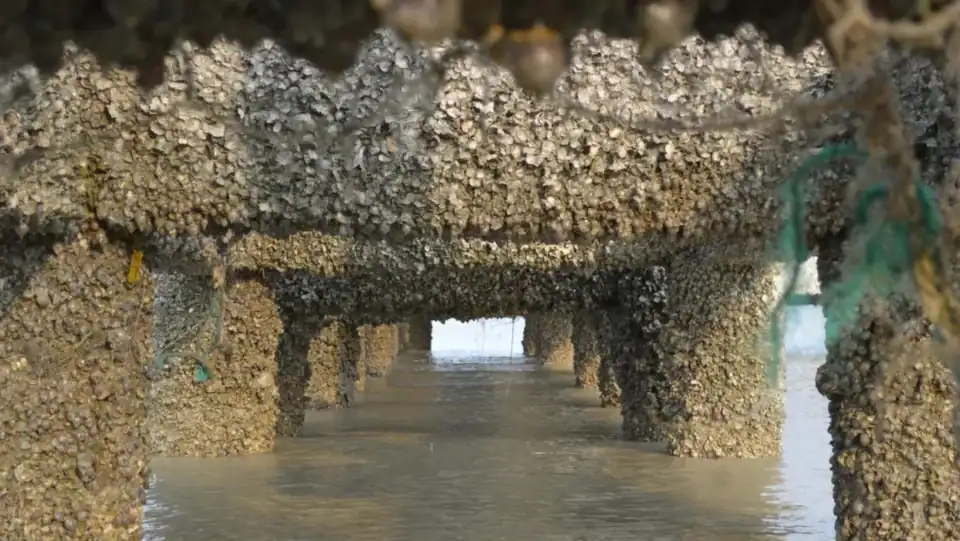
Bangladesh is no longer relying solely on concrete dams to protect its coast from cyclones and tidal waves. In February 2026, one of the world’s largest ‘bio-engineered coastal walls’ was successfully completed on the Sitakunda and Mirsarai coasts.
It’s a living wall of artificial oysters and mangrove algae that calms destructive sea waves using natural processes.
A special type of concrete frame has been installed on the seashore where oysters and columns settle naturally. These oysters create a huge rocky wall over time.
In the 2025 cyclone, it was seen that this natural wall is capable of reducing the power of sea waves by about 60 percent. Our research has shown that these reefs not only prevent erosion, but also protect marine biodiversity.
In 2026, it was seen that the breeding of hilsa and other marine fish around these reefs has increased. Fishermen are now catching a lot of fish close to the shore.
Experts from the Netherlands have recognized this model of Bangladesh as ‘cheap and sustainable’. This proves that it is possible to protect nature with the help of nature, not against it.