

The biggest challenge in today’s world for combating the impacts of climate change and achieving net‑zero carbon emissions is storing energy in a sustainable and environmentally friendly way. Conventional lithium‑ion batteries place long‑term strain on the environment because their raw materials are difficult to extract from mines and complex to recycle.
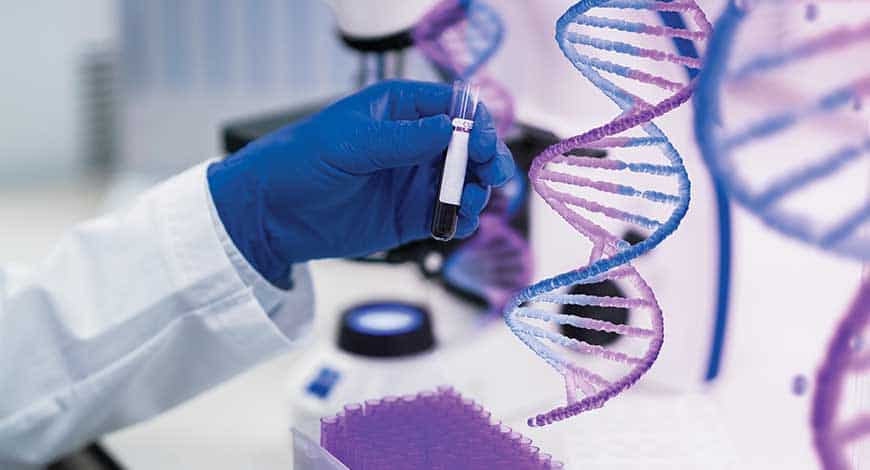
In this context, a new fuel‑free energy‑storage technology created an unprecedented stir in the global scientific community in May 2026. Developed by researchers at the University of California, this method is based on the structure of human DNA and can trap solar energy in chemical bonds.
A simple yet profound observation about human skin and DNA underlies this groundbreaking research. Dr. Grace Han, a noted scientist at the University of California, Santa Barbara (UCSB), conceived the idea after experiencing sunburn during a trip to Southern California.
Over millions of years of evolution, the DNA molecules in our skin have developed a protective mechanism that shields the body from the sun’s harmful ultraviolet (UV) rays. When intense sunlight falls on the skin, DNA molecules change from their normal straight shape, compressing or distorting.
With the help of a special enzyme called photolyase, they later return to their original form. Dr. Han thought that if energy could be stored and released by changing the shape of molecules, it could provide a lasting solution to the energy crisis.
Scientists transformed this idea into technology and named it Molecular Solar Thermal Energy Storage (MOST). The operation of this system can be compared to a mousetrap.
Just as a mousetrap is set by applying external force and releases energy when the trigger is pressed, these molecules absorb sunlight, change their structure, and become tiny “traps” or pockets of energy.
When a stimulus or trigger is used to return these molecules to their original state, the stored thermal energy is released very rapidly. In the laboratory, Dr. Han and her team have shown that a liquid mixture of these molecules can boil water in a small container in the blink of an eye.
One of the most attractive features of this technology, which can outperform lithium‑ion batteries, is its remarkable energy density. According to an analysis by researcher Casper Math‑Poulsen of the Polytechnic University of Barcelona, Dr. Han’s molecular system can store about 1.65 megajoules (MJ) per kilogram.
The energy density of this new technology is much higher than that of the advanced lithium‑ion batteries currently used in smartphones, laptops, and electric vehicles (EVs). Moreover, because these molecules are extremely lightweight, they are expected to open new horizons for portable technologies. Using computer modeling, UCLA Professor Kendall Houk accurately predicted the performance of these molecules in advance, which accelerated the success of this research.
Limitations and challenges for scientists Like any new technology, there are significant challenges to bringing this laboratory success to the commercial market, and the international scientific community is actively working on them.
- Wavelength limitation: John Griffin, a scientist at Lancaster University, notes that these molecules require very intense ultraviolet (UV) light of around 300 nanometers to be activated or charged. Unfortunately, only a very small portion of such harsh UV penetrates the atmosphere to reach the Earth.
- Complexity of chemical triggers: At present, extracting energy or heat from the molecules requires triggers such as highly corrosive chemicals like hydrochloric acid (HCl), which are not safe for general use.
- Mechanical durability: According to Harry Hoster, Scientific Director at the University of Duisburg‑Essen, these light‑sensitive liquid molecules must be spread in extremely thin layers to remain effective. When this liquid is circulated through pipes or pumps, mechanical friction can damage internal parts of the device.
Future prospects Scientists have already begun working on advanced versions to overcome these limitations, including smart windows and solid‑state technologies. John Griffin and Grace Han are currently attempting to develop a solid‑state coating instead of the liquid system.
If successful, these molecules could be applied as a special coating or film to window glass. These so‑called smart windows would absorb intense sunlight and heat in summer to keep interiors cool while storing that energy.
Later, in winter when heating is needed or when window glass fogs up, a safe trigger or switch could release the stored heat. This would drastically reduce the large amounts of electrical energy wasted on heaters or water heaters in cold‑climate countries.
For readers of the environment and climate‑conscious portal “GreenPage,” this discovery carries a highly positive message. As we search for alternatives to crude oil, coal, and natural gas, a solution has emerged from nature itself — inspired by DNA mechanisms.
This 2026 scientific breakthrough suggests that the world of tomorrow could be carbon‑free and move beyond dependence on conventional batteries.
Although the technology is still in the early stages of commercial development, with proper funding and further research this molecular energy‑storage system could greatly accelerate the global transition to green energy.