
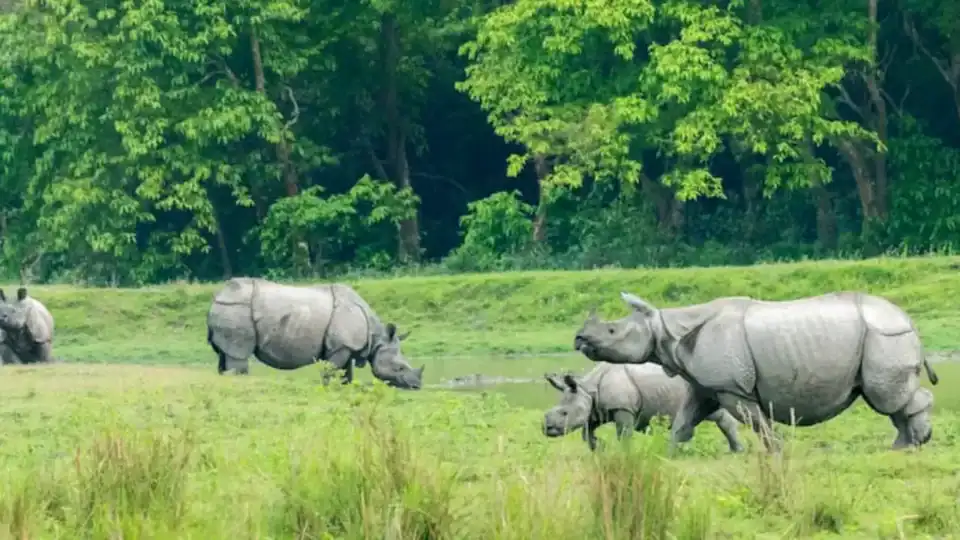
Africa’s savannah region means immense natural beauty and a diversity of endangered wildlife. But the dark side of these large grasslands is the international poaching ring, which hunts for valuable ivory and rhino tusks. Rhino tusks are mostly made of a protein called keratin, which is also found in human hair and nails.
Thousands of elephants and rhinos are indiscriminately hunted every year, and many species are now facing extinction. Traditionally, it was almost impossible to prevent poaching in this vast area with human-driven patrols or simple forest guards. In today’s world, the effective use of artificial intelligence (AI) and drones in national parks in South Africa and Kenya has transformed wildlife conservation.
The new helper for the savannah: AI and drone technology. Finding criminals in large forests like Kruger National Park in Africa or Masai Mara in Kenya has always been a big problem.
Currently, park authorities are using state-of-the-art drones and machine learning algorithms to permanently solve this crisis. Through real-time data processing, any unusual movement deep in the forest is now instantly transmitted to the central control room.
Smart surveillance and thermal imaging effectiveness: Poachers usually choose the darkness of night to avoid the eyes of law enforcement. But the thermal cameras and night vision sensors in modern AI-powered drones have permanently solved this problem.
Temperature-based identification: In the cold night savannah, thermal cameras can easily detect human body heat or the heat from a vehicle’s engine.
Automatic AI Alerts: The AI software looks at the camera footage in real-time to find out if the movement is from a wild animal or a human. If the presence of a human is confirmed, it immediately sends an automatic alarm or message to the central server.
Fastest Ranger Response: This instant message allows park rangers or forest guards to reach the exact coordinates without delay and to arrest poachers before they commit any crime.
Crime Reduction and Success Stories: Using modern technology has cut wildlife killing in some African sanctuaries by about 80 percent or more.
For example, the rate of rhino poaching has decreased significantly after the use of AI-enabled collars and smart tracking systems in some protected parks in South Africa. Rangers are now much more efficient. This is because they can use data from whole protected areas through systems like the Kenya Wildlife Server (KWS) and ‘EarthRanger’.
Challenges and future action plans: While the use of technology has been a boon to wildlife conservation, it also has some realistic challenges. Poor internet access in remote places, short battery life, and high upkeep costs often make it hard to expand this project.
Environmentalists believe that technology will get better and cheaper in the future. They think this will happen with help from international donations and teamwork from local governments.
Green Page thinks that using artificial intelligence and drones is not only a new way to stop serious crimes like wildlife poaching, but also an important duty to protect the world’s precious biodiversity. This successful use of technology in the African savannah shows that when science and people work together, we can save endangered animals from disappearing for good.
Green Page thinks that using this new technology in wildlife conservation areas, like Bangladesh, will help keep our natural balance in the future.