
The history of people giving their lives for others in charity is common, but the quiet sacrifices of Italian missionaries in free Bangladesh have made that history special and proud. From leprosy and tuberculosis patients in the rugged coastal regions of South Bengal to the Santal community in the plains of North Bengal, or the underprivileged children in the remote hilly valleys of the Chittagong Hill Tracts, these Italian priests and nuns have stood by the side of the neglected, highly exploited and marginalized people of this country with absolute compassion and guardianship.
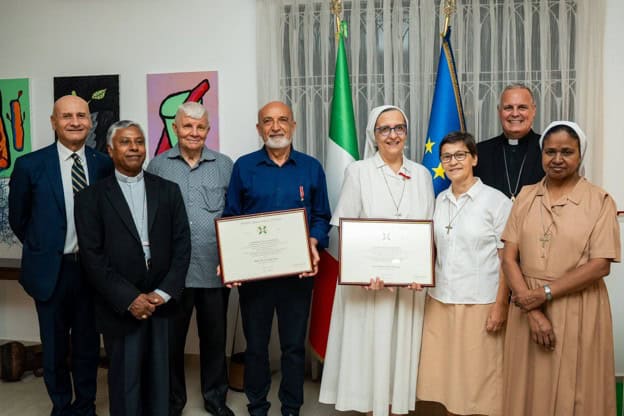
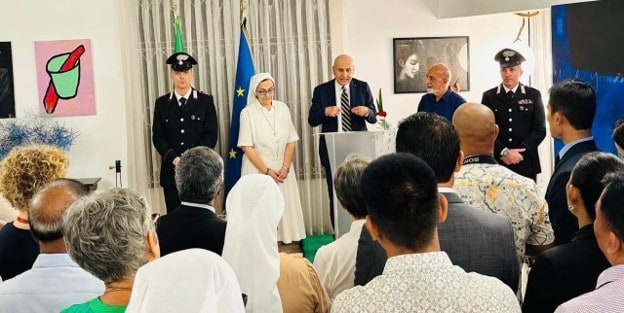
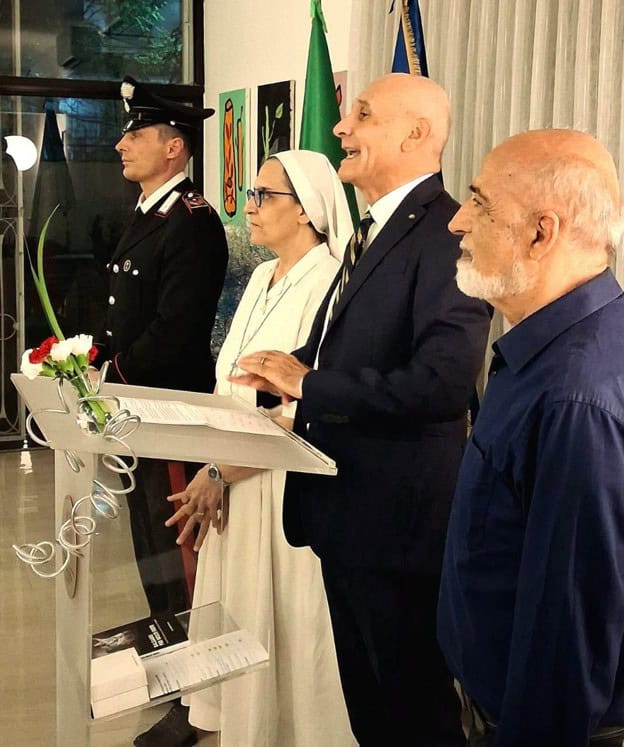
The recent awarding of two dedicated Italian missionaries – Sister Roberta Pignone and Father Pietro Luigi Lupi – by His Excellency the President of the Republic of Italy, Sergio Mattarella, with one of Italy’s highest national knighthoods, the ‘Cavaliere dell’Ordine della Stella d’Italia’ (Order of the Star of Italy) is a unique recognition of their contributions. No; rather, it is a historical acknowledgment of their past generations of pastoral, medical and socio-economic development in Bangladesh.
This recognition has elevated the service of the Catholic Congregation to a new level and brought a unique honor to the entire Italian community living in Bangladesh. It is a highly prestigious state civilian honor in Italy. The title ‘knight’ goes to those who have helped promote Italy’s image overseas and strengthen ties with other nations.
Sister Roberta Pinion played a big role in improving health care, especially in southern Bangladesh where medical help is often ignored. Her efforts are remarkable. The ‘Missionary Sisters of the Immaculate’ (known as PIME Sisters in Bangladesh) is a dedicated profession of Catholic nuns. He mainly devoted himself to the medical services of the coastal, remote and underprivileged communities of South Bengal.
Sister Roberta Pinion has worked nonstop for over a hundred years as the project leader and the only full-time doctor at the famous Damien Hospital in Khulna Bangladesh. In southern Bangladesh, Damian Hospital is the only place that gives special care to patients with leprosy, tuberculosis (TB), and HIV/AIDS who deal with severe social neglect and discrimination. Sister Roberta efficiently manages the 33-bed main hospital here as well as oversees 3 more rural clinics and 15 tuberculosis control centers.
She does not limit her work to the hospital. She keeps helping by spreading health awareness and giving out free good medicines in the terrible slums of Khulna. She also visits very poor families at their homes. Her ongoing fight for mental health and social issues has gone beyond healthcare. It has turned into a movement to help people with leprosy and tuberculosis. This way, they won’t suffer from social bias, fear of contagion, and unfair treatment.
Father Pietro Luigi Lupi, known as Father Lupi by the people, is quietly making big changes. He is helping with education, supporting poor children, and promoting the rights of ethnic minorities. He has served for many years as a well-regarded priest in the Italian Catholic group ‘Xaverian Fathers’ and as the Regional Superior in Bangladesh. He made a lasting impact by supporting the rights of the poor, helpless, and ethnic minorities in this country. He also helped them understand education better.
Father Lupi’s visionary role in the socio-economic transformation of the extremely neglected and marginalized ‘Dalit’ community, especially in Satkhira and Khulna regions, is extraordinary. Thanks to his ongoing support, Dalit youth in the area have had the chance to get higher education and formed a strong NGO called ‘Dalit’ to stand up for their legal and social rights.
He managed integrated schools and day-care centers so that not only the rural marginalized people, but also the marginalized children of the dirty and dangerous slums near Dhaka’s Tejgaon railway station, get the light of education without getting lost in the dark world of hard child labor and crime. Besides, he involved himself in teaching children of small ethnic groups in remote hilly areas like Lama in Bandarban.
In recent years, Father Lupi has been working intensively to ensure food, health and humanitarian assistance to the Rohingya refugees who have taken shelter in Cox’s Bazar and raise their oppressed voices to the international community. He also provided financial assistance to poor students for higher education.
The deeds of the Italian missionaries in Bangladesh show love and service that go beyond just a few years; they are deeply linked to our important Liberation War of 1971. In the face of terrible violence and killings by the Pakistani forces, the Italian priests from the Xaverian and PIME missions made their churches, missions, and shelters safe for the scared people in the area, risking their lives.
They stood by the freedom-seeking people as absolute friends. Especially, Father Marino Rigon cared for and ensured the safety of the wounded freedom fighters in our Baniyachar Dharmapalli shelter. In 2012, Bangladesh gave the ‘Friends of Liberation War Honor’ to Father Marino Rigon from the Xavierian Mission. This was to recognize his brave help and true friendship.
Father Marino Rigon was a shining star among the Italian missionaries in this country. He lived in Bangladesh for more than sixty years. He worked hard to promote education and help others. He also loved Bengali literature and culture very much.
He made Bengali literature known around the world by translating Rabindranath Tagore’s and Jasimuddin’s important works into Italian. In recognition of this extraordinary contribution, the Government of Bangladesh awarded him honorary citizenship in 2009. Although he passed away in Italy in 2017, his final wish was to be laid to rest in the soil of this beloved Bengal.
Honoring that heartfelt desire, the Government of Bangladesh undertook a special and historic initiative in 2018 to bring his remains from Rome, Italy, to Shelabunia village in Mongla. There, a contingent of the Bangladesh Police accorded him a guard of honor, and he was laid to rest with full state honors.
Father Paolo Ciceri and other Italian PIME missionaries helped improve the lives of the Santal and other minority groups in the north. They focused on social and economic growth, land rights, and education. Their work has received a lot of praise from local and national people.
The message behind this great sacrifice extends beyond mere service; it embodies a profound lesson in religious harmony and human solidarity. Patrick D’Rozario, CSC—Bangladesh’s first cardinal—noticed that it’s important for Christians to build harmony and reduce mistrust and misunderstandings between different religions.
It is through interfaith dialogue and genuine, tangible love that such human bonds are forged, ultimately making society beautiful and peaceful.
The lives of these Italian missionaries show us that real humanity goes beyond borders, countries, or group identities. This is important now, as the world faces division, greed, and racial hatred. Sister Roberta and Father Lupi have made important yet quiet contributions to health and social change in the country.
This work is essential for the partnership between Bangladesh and Italy. This relationship is not merely founded on trade or politics; rather, it rests upon an unshakeable foundation of shared humanity, compassion, and selfless love. It is our duty as a state, society, and citizens to show respect and kindness to these foreign friends who have quietly brightened lives in Bangladesh.
Nicholas Biswas
is a media freelancer and a writer who has received the UNFPA Media Award.