

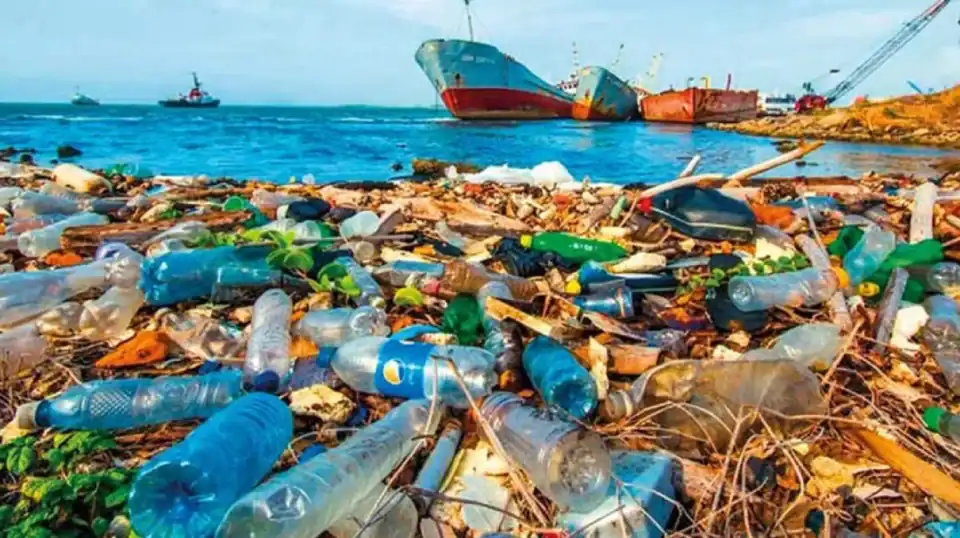
Plastic Pollution Agreement: Expectations and Industry Opposition to ‘Paris Agreement II’
The United Nations is nearing the completion of a legally binding global treaty on plastic pollution, recognizing it as a major environmental crisis.
If signed and implemented successfully, this agreement will be one of the most significant environmental measures in history, similar to the Paris Agreement on climate change.
The agreement aims to manage the entire life cycle of plastic products, from raw material extraction to final disposal.
The proposed agreement aims to ban harmful single-use plastics and establish global targets for plastic recycling and minimal material use.
The initiative includes the European Union and over 50 developing countries, forming an “ambitious coalition” aimed at creating a strong, enforceable international agreement.
However, the petrochemical and plastics industries are pushing hard against the agreement’s strict provisions. They want to emphasize recycling, but oppose the goal of reducing production.
Environmental groups and scientists warn that recycling alone cannot effectively address the massive issue of plastic pollution.
A recent UCSB analysis warns that if plastic production isn’t reduced, ocean plastic could triple by 2050.