

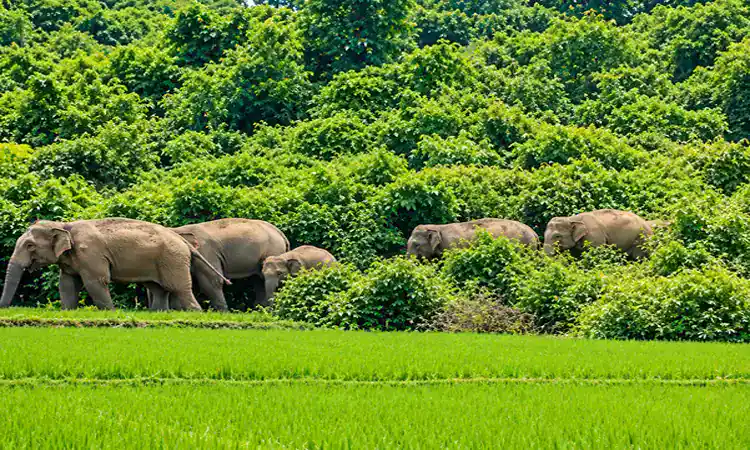
There is a growing call to find sustainable solutions for protecting cross-border elephant populations and mitigating human–elephant conflict. During a national seminar on 27 October 2026 at Dhaka, experts and wildlife groups said that elephant groups stuck near Bangladesh’s borders are a big problem for wildlife conservation. Cutting down trees and building homes in the hills by the borders of India and Myanmar are stopping wild elephants from moving naturally.
Key Results and Protection Plan: At the seminar, wildlife experts and climate researchers suggested a few cross-border actions and key ideas to help protect elephants in the long run:
Cross-Border Wildlife Corridors: It was suggested that forest areas near the borders—especially in Sherpur, Netrokona, Chattogram, and the Chittagong Hill Tracts in Bangladesh—be marked and protected as international migration paths to help elephants move safely.
Local Community Involvement and Drone Monitoring: Focus was on using satellite tracking and drones. Also, there was a push to improve local “Elephant Response Teams” (ERTs) to stop elephants from entering human areas. Furthermore, there was a call for the expedited disbursement of government compensation to farmers for crop losses caused by elephants.
Elephants are not just an endangered species; they are important for keeping the forest environment balanced.
Green Page believes that without free movement for wild elephants through regional agreements and safe cross-border paths, the hilly ecosystems will always be at risk.