

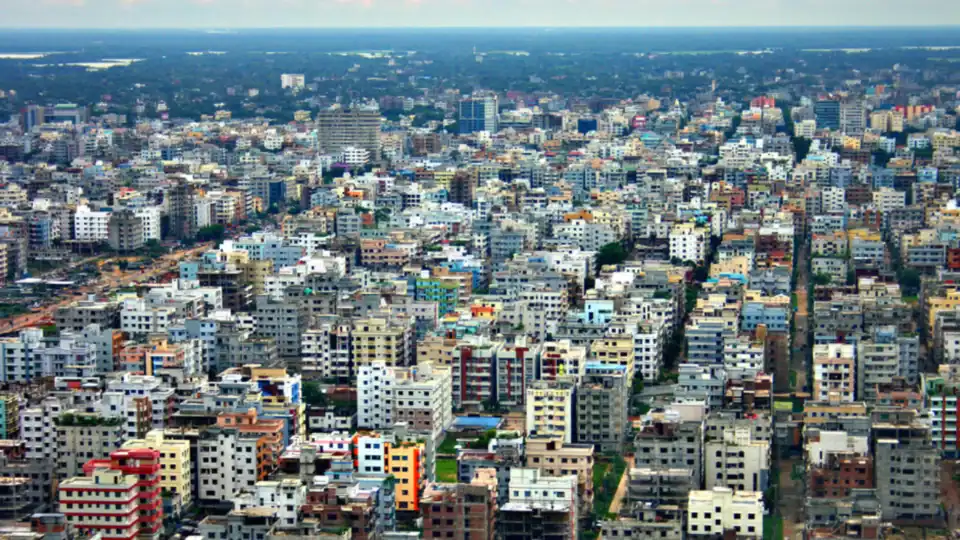
Dhaka’s Air Quality Index (AQI) has reached its lowest level in ten years. Once one of the world’s most polluted cities, Dhaka is now becoming known as a ‘Clean Air City’.
The main idea is to replace all old diesel buses with fully electric buses (EV Buses).
It has been established through a study on air pollution shows that since the government started the ‘e-bus’s’ project in 2025, harmful PM 2.5 levels in Dhaka’s air have begun to go down.
In March 2026, it is now under 20 micrograms per cubic meter, which is near the World Health Organization (WHO) standards. Instead of black smoke and loud horns from buses, the soft hum of electric buses can now be heard.
Smart Charging Stations and Solar Power: Big ‘smart charging hubs’ have been built in the Gabtoli, Sayedabad, and Kuril areas of Dhaka.
High-power solar panels are on the roofs of these stations. They generate 40% of the electricity needed for the buses. These buses of 2026 have AI traffic management systems, which are helping to reduce traffic jams.
Public Health and Economy: The Ministry of Health says that the number of patients with lung and breathing problems in Dhaka has gone down by 30 in the past year.
The government has saved about Tk 2,000 crore annually on diesel imports. Dhaka is now a good example for South Asia. It shows that even a big city can be free of pollution if there is a desire to change.