

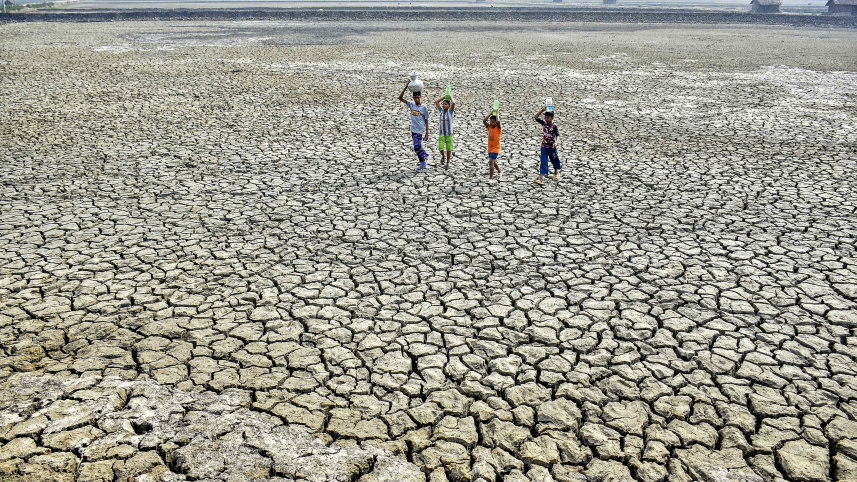
Intensifying heatwaves, driven by climate change, are causing a severe decline in labor capacity and GDP in Bangladesh.
According to a comprehensive global assessment on climate and health released on 1 November 2026, Bangladesh faces an estimated annual economic loss of approximately $17.5 billion USD, resulting from reduced working hours and lower productivity caused by excessive heat.
The health vulnerability of millions of workers—particularly those in sectors like agriculture and construction who labor in open-air environments—has become a critical global and national concern.
Key Findings and Health Overview: The report highlights significant data regarding the risks posed by heatwaves and the limitations within current national climate policies:
Risks to Marginalized Groups and Children: Recent statistics indicate that over the past few years, the risk faced by children and newborns exposed to extreme heatwaves has surged by 162%, while the risk for the elderly population has risen by 136%. Extreme temperatures are also accelerating the spread of infectious diseases, such as dengue, and increase.
National Planning and Resource Allocation: Although national climate policies nominally prioritize the health sector—alongside water and agriculture—there remains a substantial shortfall in the allocation of resources and technical implementation on the ground.
Researchers are strongly urging that a dedicated portion of climate finance be earmarked for building health-resilient infrastructure, well ahead of the COP31 summit.
Conclusion and ‘Green Page’ view: Global warming and heatwaves are not just changes to the environment; they are a serious threat to the country’s economy and the future of its workers.
Green Page believes it is essential to immediately formulate a ‘Heat Action Plan’—or a policy for managing heatwaves—to ensure a safe working environment for labourers, while also strengthening the climate-health fund within the national budget.