

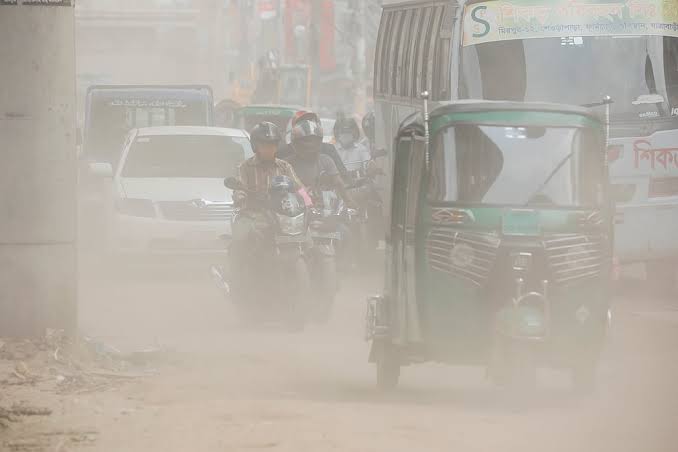
As the onset of winter approaches, the air quality in Dhaka is once again reaching hazardous levels. According to the real-time Air Quality Index (AQI) monitored by the global air quality organization IQAir, Dhaka’s AQI score reached 170 on 5 November 2026—placing the air firmly in the “unhealthy” category.
The pollution in Dhaka has ranked it as the 4th worst city in the world, putting old people and kids at great risk to their health.
Key Data and Air Pollution Situation: Insights from IQAir and environmental experts highlight the primary drivers of winter-time pollution:
Dry Weather and Particulate Matter: With dry weather prevailing across the country—as forecast by the Bangladesh Meteorological Department—and a decline in atmospheric humidity, particulate matter (PM2.5) levels have surged significantly. This is exacerbated by ongoing construction activities, mega-projects, and unplanned excavation work.
Health Risks and Precautions: With the AQI exceeding 170, children, pregnant women, and individuals with respiratory conditions are advised to avoid unnecessary outdoor exposure. Medical professionals recommend the use of high-quality masks when venturing outside, and suggest that city residents sprinkle water around their homes to help settle dust.
Conclusion and Green Page Perspective: Air pollution in Dhaka during the winter has become a recurring annual phenomenon.
Green Page claims that just using temporary warnings is not enough. To stop this health crisis, we need to take real action. This includes stopping open-air construction, banning unfit vehicles, and making the Dhaka South City Corporations sprinkle water on roads regularly.