
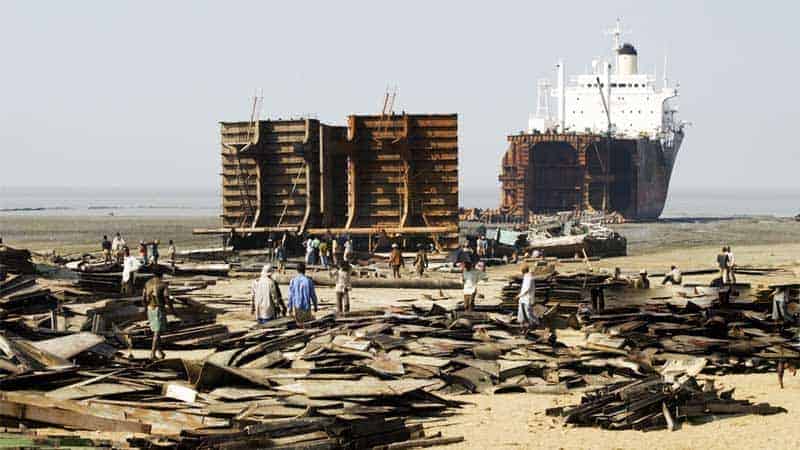
Sitatunga’s shipbreaking yards in Bangladesh Coastal area have long been at the center of environmental pollution, but recently the industry has taken on a new dimension of “environmental crime.”
Investigations by international environmental organizations and local researchers have revealed that under the guise of scrapped ships, tons of toxic e‑waste and banned chemicals are being dumped in Bangladesh from developed countries, poisoning the coastal ecosystem of Chattogram.
Types of Crime and Environmental Disaster
- Hidden inside decommissioned ships are lead, mercury, asbestos, and radioactive materials.
- Sea and soil contamination: These toxic wastes are being discharged directly into the Bay of Bengal and coastal soils without any treatment. As a result, crabs, oysters, and marine fish are losing their reproductive capacity.
- Health risks for workers: Laborers working without protective gear are suffering from cancer and severe respiratory diseases.
Preventive and Legal Measures
Since 2026, the Department of Environment and the Coast Guard have introduced advanced scanners to inspect ships for hazardous waste before they enter the yards.
Conclusion
Using Bangladesh as a dumping ground for the developed world’s waste is an international crime that must be stopped immediately. Unless the shipbreaking industry is fully compelled to follow “Green Yard” policies, Sitakunda’s coast risks turning into a dead sea forever.
Would you like me to also prepare a policy advocacy brief version of this translation — something concise and action‑oriented for NGOs, government officials, or international partners?