
Climate change is driving the Sahara Desert rapidly southward across Africa, swallowing up agricultural land. To halt this extreme desertification and reduce global carbon emissions, the African Union, with international cooperation, has launched a unique initiative to stop the Sahara’s advance.
By planting trees across vast areas of the Sahel and ensuring sustainable land use, the most ambitious environmental project in history — The Great Green Wall — has become a beacon of hope for global conservation.
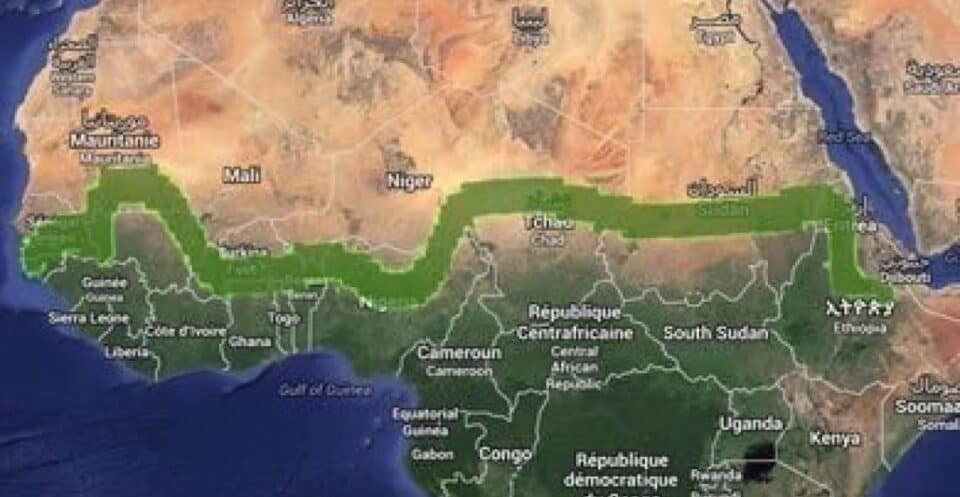
Stretching nearly 8,000 kilometers from Senegal to Djibouti, from the Atlantic Ocean to the Red Sea, this afforestation initiative (New Life/Solution) is beginning to show visible success. The project’s main goals are to stop the spread of the Sahara, restore soil fertility, and secure livelihoods for local communities in the Sahel.
Progress and environmental impact: According to the latest data for 2026, about 30 percent of the project has been completed with funding from the African Union and the World Bank.
Soil restoration: Planting drought‑tolerant native species such as Babla and baobab is reviving the once‑barren desert soils. As soil moisture increases, many lost wildlife species and insects are beginning to return to the region.
Greening: This is not merely planting rows of trees; it is an integrated ecosystem restoration program aiming to rehabilitate roughly 10 crore hectares (100 million hectares) of degraded land back into productive use.
Carbon sink: This vast forest is expected to sequester about 250 million tonnes of carbon dioxide by 2030, playing a significant role in curbing global warming.
Socioeconomic development: Beyond planting trees, the project has created employment for millions of local farmers. They now harvest gum arabic and fruits from the trees and sell them on international markets, contributing to poverty reduction.
Climate resilience: The project acts as a bulwark protecting the Sahel from rising temperatures and worsening drought.
The Great Green Wall is more than a reforestation effort; it is an unforgettable symbol of humanity’s resilience against climate change. It proves that, given a chance, nature can turn even harsh desert landscapes green again.
Successes and challenges
Successes: The project has restored millions of hectares of degraded land in countries including Ethiopia, Senegal, and Nigeria, improving food security in those areas.
Challenges: Political instability, funding shortages, and the extremely arid climate of the Sahel remain the project’s main obstacles.
Future prospects: The Great Green Wall is not just a tree‑planting program; it represents a new horizon in the struggle for survival for Africa’s people. Experts believe that with timely funding and continued international cooperation, by 2030 it could become the world’s largest living structure and completely transform the face of the Sahel.