

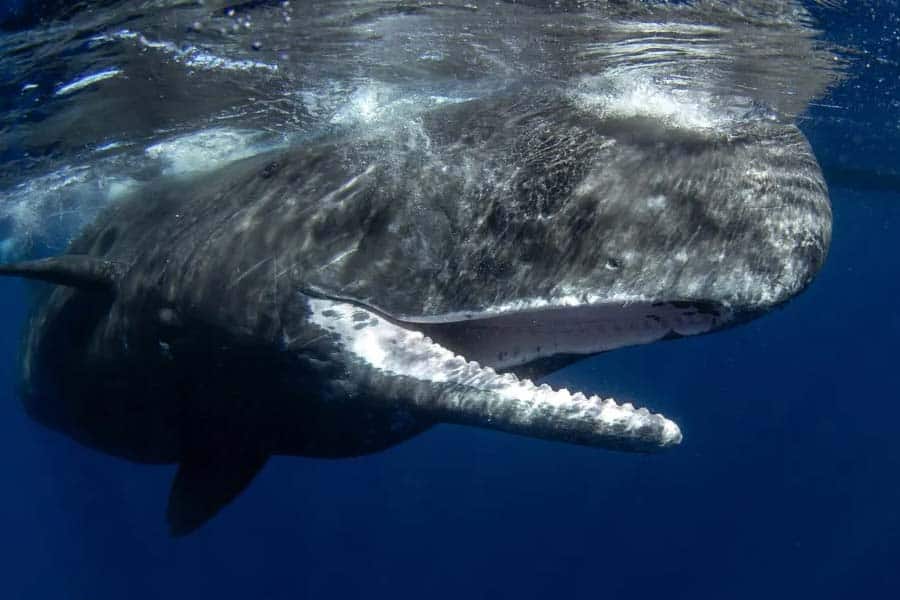
Human curiosity about how animals communicate has always been timeless — and now that dream is on the verge of reality.
Researchers from the Massachusetts Institute of Technology (MIT) and Project CETI (Cetacean Translation Initiative) have recently achieved groundbreaking success in decoding the language of sperm whales using artificial intelligence (AI). This research adds a remarkable new dimension to marine biodiversity conservation.
How Whales Communicate
- Sperm whales communicate deep in the ocean through a series of “click” sounds known as codas.
- These clicks are not random; they carry structured patterns similar to human language.
AI Modeling
- Scientists recorded millions of clicks in the Caribbean Sea using underwater microphones.
- Advanced AI algorithms revealed that these sounds have a grammar, tone, and rhythm, forming what researchers call a “phonetic alphabet.”
Conservation Impact
- Decoding whale language could help scientists understand migration routes, feeding grounds, and distress signals.
- This knowledge can guide changes in shipping routes to prevent collisions with whales and protect deep‑sea ecosystems.
Why It Matters
This breakthrough is more than just decoding animal sounds — it’s a new era of coexistence. By learning to “listen” to whales, humanity gains a powerful tool to safeguard marine life and ensure healthier oceans.