
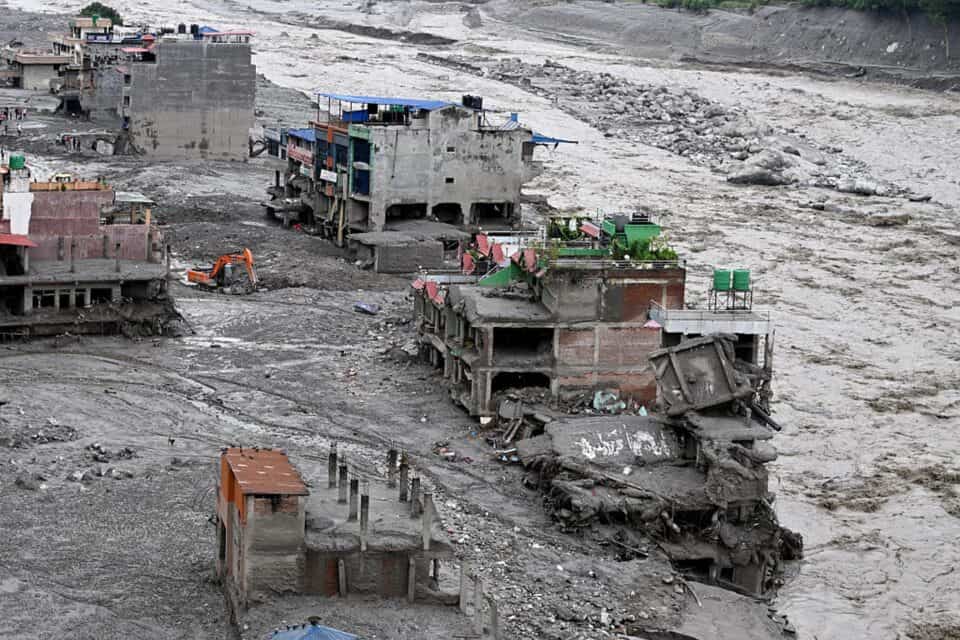
The recent devastating flash floods in Nepal have reminded the world of a stark reality: climate disasters know no borders. They do not stop at country borders, do not care if a country is rich or poor, and do not let any country off the hook for global greenhouse gas emissions just because it adds little to those emissions. While climate change is a common global crisis, its impacts are being felt most acutely in those countries that are least responsible for the problem.
Nepal is a shining example of this disparity. The Global Climate Report states that Nepal’s carbon dioxide emissions are less than 0.1 percent of the total, but the country is very likely to face climate-related disasters. The recent flash floods have shown how extreme weather can quickly escalate into humanitarian disasters—destroying homes, infrastructure and livelihoods.
This tragedy is all the more significant given Nepal’s geographical location. Home to the world’s highest mountains, Nepal is part of the Himalayas, sometimes called the “Third Pole” because of its vast ice caps. Nepal’s glaciers have lost about a third of their ice because of global warming over the past thirty years. This threatens water safety, farming, and billions of people who need Himalayan Rivers.
Rapidly melting glaciers can create dangerous glacial lakes, which can destabilize and cause flash floods downstream. At the same time, the continued erosion of glaciers also threatens long-term water availability. As a result, what happens in the high mountains can affect people far away.
The human suffering and loss of life in recent flash floods is too great to ignore. Numerous videos circulating online show rescuers rescuing people trapped in dangerous floodwaters. These include countless personal tragedies – families separated, homes washed away, villages struggling to recover. The disaster has not only destroyed resources but also livelihoods and a sense of security.
According to a report by Chennai-based media outlet The Hindu, the death toll in the floods has risen to 1,344 as of September 5, 2026. Nearly 5,000 people are still missing. The country’s security forces have rescued 13,000 people so far. These are not just statistics – these are the lives of people who have been devastated by the recent terrible disaster. Currently, about 22,000 children are without safe water, with acute food and oxygen shortages – creating a terrible humanitarian catastrophe.
This is the fundamental injustice of climate change: those who have contributed the least to this crisis often suffer the most severe consequences. For decades, industrialized countries have been responsible for the bulk of greenhouse gas emissions. According to the UNEP Emissions Gap Report 2025, the world’s 20 largest economies (G20 countries) were responsible for about 77 percent of global greenhouse gas emissions in 2024. On the other hand, countries like Nepal and Bangladesh – which contribute little to global emissions – face a high risk of climate-related disasters. This disparity raises an important question: not everyone can be equally affected by a crisis for which a few countries are largely responsible. So who will bear the cost of making up for this damage?
Climate change is not just an environmental issue; it is a matter of justice, development, poverty, human rights and international responsibility. Recently, the devastating floods in Nepal destroyed decades of development gains in a matter of hours. In a matter of moments, roads, bridges, schools, homes, farmland and businesses in the devastated areas of Nepal were destroyed.
For families living near the poverty line, losing a home or livelihood can mean years of suffering. The consequences reach outside the disaster area. Transport, power, and food supplies are interrupted. Farming is harmed, and rebuilding costs force poorer countries to divert resources from essential fields such as education and health.
This is why climate disasters know no borders. Their scope and impact spread from country to country. The atmosphere does not respect political boundaries. Carbon dioxide from one nation mixes into the global air, boosting global warming and affecting nearby countries. Each country has a responsibility to reduce emissions according to its own capabilities. Historically high-emitting countries also have a special responsibility to support vulnerable regions like South Asia. This is where climate justice comes in.
Adaptation is crucial for countries like Nepal – strong early warning systems, climate-resilient infrastructure and effective disaster preparedness are needed. But adaptation alone will not solve the problem; if global temperatures continue to rise, there are limits to adaptation. The world must therefore collectively take action to reduce and halt the root cause, namely greenhouse gas emissions.
Nepal’s experience also carries a powerful message for South Asia. Bangladesh, India, Bhutan, Pakistan and other countries in the region face interconnected climate risks – floods, cyclones, landslides, droughts, and heatwaves. What happens in the Himalayas can affect river systems downstream; what happens in one country can have dire consequences for another. This requires mutual understanding and joint solutions; For example, disaster preparedness, regional cooperation on weather forecasting and river management, and direct financial and meaningful technical assistance to vulnerable countries through the United Nations and statutory international institutions.
Most importantly, climate action cannot be limited to speeches and declarations. People facing floods and melting glaciers need real action—safe infrastructure, reliable warnings, resilient livelihoods, accessible financing, and international solidarity.
The scene of people being rescued from the grip of floods is not just a natural disaster—it is a warning to the world. Behind every statistic of the terrible natural disaster that has struck Nepal are people whose lives and livelihoods have been disrupted in some way.
Nepal’s experience forces us to rethink climate responsibility. Even if a country’s carbon emissions are small, its risk profile can be huge. Conversely, the G20 countries that emit more carbon should help the affected countries so that climate justice is established.
Climate change is global, but climate risk is uneven. The disaster affecting Nepal’s weak mountain communities reminds the world that the climate crisis can reach anyone. Political borders can separate countries, but they cannot cut them off from the atmosphere, oceans, rivers and weather systems that connect our planet.
Climate disasters know no borders. Nor should the responsibility to prevent, respond to and protect the most vulnerable know no borders. They must be tackled collectively.
It is time for the world to realize that climate justice is not a charity or a gift; it is a shared responsibility. If emissions in one part of the world can cause suffering in another, then climate action, finance, technology and solidarity must also cross borders.
Nepal’s floods should not be seen as an isolated national tragedy. It should be seen as a warning to the world: no country can survive a changing climate alone, and no country should be left to deal with its consequences. Everyone must step up.
Author: Nicholas Biswas
is a media freelancer and a recipient of the United Nations Population Fund (UNFPA) Media Award.