

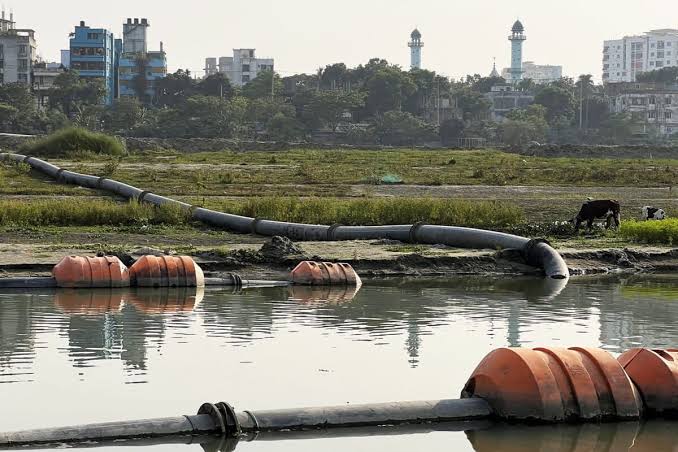
The current government of Bangladesh is prioritizing nature-based solutions to tackle the rising drought in northwestern Bangladesh, decreasing groundwater levels, and salt issues in coastal regions.
Minister Abdul Awal Mintoo, who is in charge of the Environment, Forests and Climate Change Ministry of Bangladesh, recently asked for better teamwork in the region and better water management. He aims to boost the country’s capacity to deal with drought and use water resources sustainably in an important meeting.
About 5.4 million hectares of land in the northwest region of Bangladesh are known to be at risk of drought. This has caused a big problem because deep tube wells are being used too much. The government has started implementing several far-reaching and effective measures to address this crisis:
- Re-draining of canals and water bodies: A mega initiative has been taken to dredge or re-drain about 20,000 kilometers of rivers, canals and water bodies across the country in the next five years to reduce pressure on groundwater and conserve rainwater. This will help recharge the groundwater table by increasing the availability of surface water.
- Smart farming and technical aid: Farmers receive real-time weather tips through mobile apps, calls, and texts. This helps spread new types of crops that can resist drought and salt. In addition, emphasis has been given to joint water management in the Ganga-Brahmaputra-Meghna basins to address the crisis in the northern and southern districts.
This work on dredging and restoration is timely. It aims to solve the growing desertification and water crisis in different areas due to climate change.
Green Page believes that water management over time and nature-based solutions will help protect the country’s agriculture and environment.