
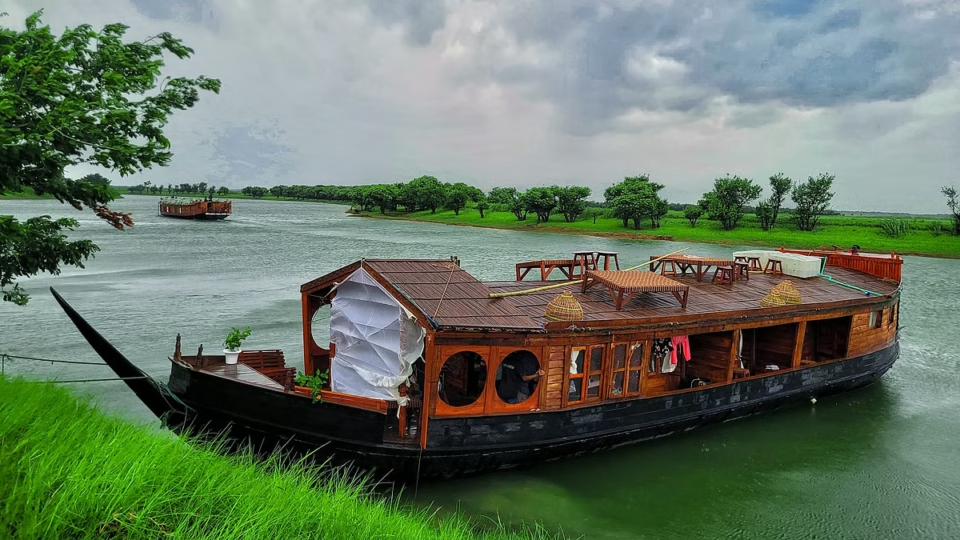
Tanguar Haor in Sunamganj, Bangladesh, is now not just a tourist destination, it is a ‘sustainable eco-system’. Bangladesh’s first ‘Eco-Token’ system was introduced here in 2026.
Tourists pay an entrance fee when they arrive. This money is allocated to the Haor Maintenance Fund through the use of blockchain technology. It also helps motivate local people to take care of the environment.
Tourists can help by picking up plastic waste. If they bring it to a booth, they receive an ‘Eco-Token’. Using this token, they can get special discounts at local resorts or boats.
After the introduction of this system in 2025, Tanguar Haor is now the cleanest wetland in Bangladesh. In February 2026, the water quality of the haor was recorded as the cleanest in the last 20 years.
This fund pays salaries to the villagers living near the haor, known as the ‘haor guards’. As a result, fish poaching and bird hunting have stopped.
A record number of over 300,000 migratory birds arrived in the Tanguar haor during the winter of 2026. Local people have now realized that if the haor survives, their tourism business and lives will survive.
This model of the Tanguar haor is now being planned to be implemented in St. Martin and the Sundarbans. This digital eco-economy of 2026 is a new chapter in the history of environmental protection in Bangladesh.