

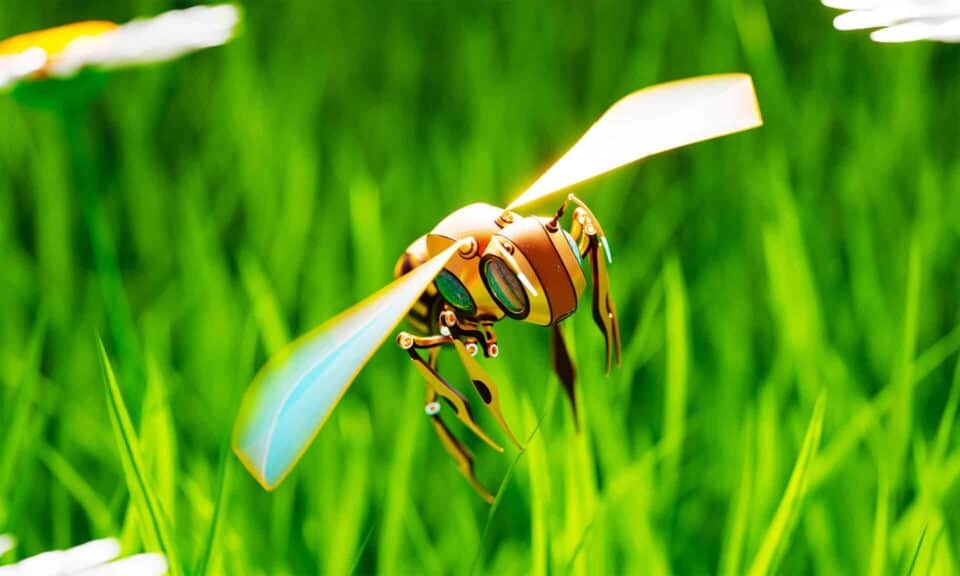
Technology fights to prevent bee extinction
Global food security is now under extreme threat due to the alarming decline in the number of bees worldwide. To address this crisis, an amazing invention has caught the world’s attention in 2026: Pollinators’ or mechanical bees.
Delft University in the Netherlands and several Japanese tech companies have developed micro-drones that can pollinate flowers like bees. These artificial bees are now the biggest trend in farming in 2026.
Bees contribute to about one-third of the world’s food production through natural pollination. Their extinction from pesticide use and climate change would lead to a collapse in agriculture.
The new technology from 2026 uses AI to analyze the fragrance and color of flowers to identify the best specimens.
Through a special liquid gel on the body of these robots, they collect pollen and spread it to other flowers. These robotic bees can communicate with each other like real bees do using their ‘waggle dance.’
Economically, this technology has become a new ray of hope for farmers. Especially in indoor farming and greenhouses, these robots can work 24 hours a day, which has increased yields by 20-30%.
Many large agro-tech companies have introduced ‘Pollination as a Service’ (PaaS), allowing farmers to rent robot bees for a set period. The 2026 market analysis shows that investment in this sector has doubled compared to last year.
However, sociologists and some environmentalists have raised questions about the ethics of this technology. They say that solving problems through technology is good, but are we taking away from trying to save real bees?
Can machines truly take the place of nature? The 2026 debate highlights that artificial intelligence can provide short-term solutions, but we must prioritize preserving nature’s balance. This buzz of robotic bees is now echoing in every agricultural laboratory in the world.